
The global demand for personalized apparel is reshaping textile production, and the Socks Printer market is becoming more specialized. Grand View Research identifies digital textile printing as a growing technology segment, supported by shorter production runs, faster design changes, and stronger demand for customized products. Smithers’ The Future of Digital Textile Printing to 2028 also highlights automation, pigment inks, and sustainable production as important industry directions.
A useful Socks Printer must do more than print attractive samples. It should deliver stable color on elastic fabrics, accurate alignment across curved surfaces, and reliable output during repeated production. Buyers also need to examine printhead quality, ink compatibility, drying systems, maintenance access, software support, and after-sales service. Small details matter. A misaligned logo can ruin an entire batch.
Ronen Samuel, former CEO of Kornit Digital, has described textile printing as “one of the most polluting industries in the world,” a reminder that equipment choice should include environmental performance. Energy use, ink consumption, wastewater requirements, and material waste deserve equal attention. No ranking is perfect. A machine that suits a European fashion studio may disappoint a high-volume factory in Southeast Asia. This guide compares seven Socks Printers for global buyers in 2026, using practical criteria rather than marketing claims alone. Readers should still verify local voltage, installation support, certification, and total ownership costs before purchasing. Sometimes, the cheapest quotation becomes the expensive choice.
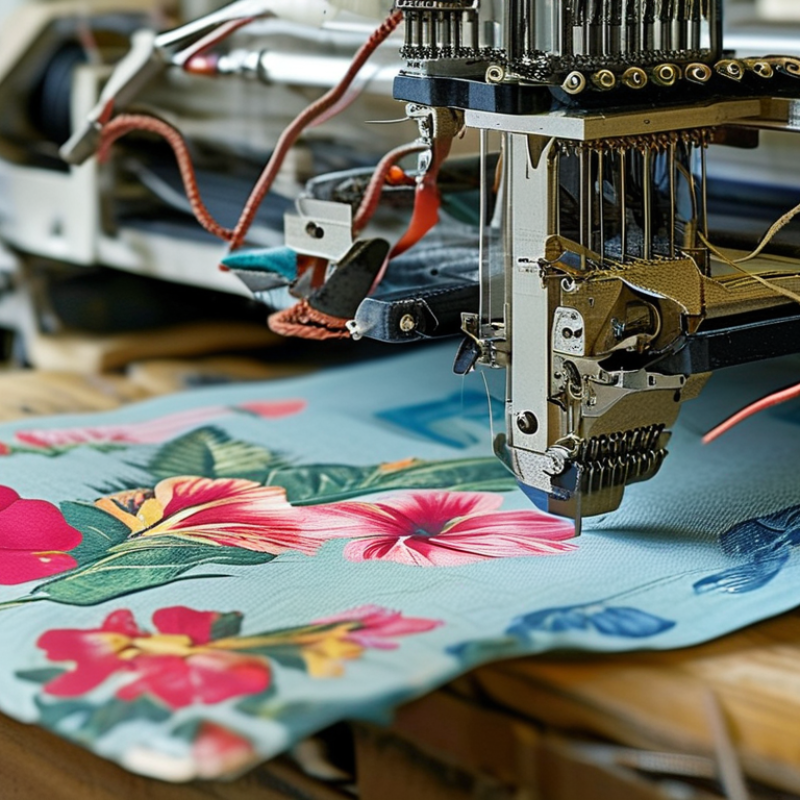
A sock printer is a textile machine that applies colored designs to knitted sock material.
It commonly uses inkjet technology, heat transfer, or digital printing after knitting. The exact process depends on the machine design. Some systems print on flat fabric before sewing. Others hold a finished sock on a rotating cylinder. The cylinder turns while print heads place tiny ink droplets across the surface.
It is a controlled process. First, operators prepare artwork in a color-managed file. The machine then adjusts ink flow, fabric tension, and printing speed. After printing, heat or steam helps fix the color. Washing tests check bleeding, fading, and stretch performance. Small details matter. A loose sock can distort stripes around the ankle.
Industry data supports this shift. Smithers’ Future of Digital Textile Printing to 2028 identifies digital printing as a growing textile production segment, driven by shorter runs and customized products. Grand View Research also reports strong growth in the digital textile printing market through 2030. These figures suggest wider adoption, but they do not guarantee profits. Energy use, ink waste, operator skill, and maintenance can change the result. In practice, a printer may produce sharp graphics yet struggle with dark cotton blends. That limitation deserves honest attention.
The best sock printer is not always the fastest machine. Grand View Research valued the global digital textile printing market at about USD 2.7 billion in 2023. Its forecast also indicates strong growth through 2030. This expansion reflects demand for short runs, personalization, and faster product testing. Buyers should therefore assess flexibility, not only advertised speed.
A reliable printer needs accurate 360-degree coverage. Check whether it handles ribbed cuffs, heel curves, and different sock diameters without visible bands. Ask for sample files printed on cotton, polyester, and blended yarns. Examine color consistency under daylight and after repeated washing. The printhead should support stable droplet control and practical resolution. Very high resolution may sound impressive, but it can reduce productivity. Specs can mislead.
Ink compatibility matters across global markets. Verify curing requirements, wash durability, ventilation needs, and documented safety data. Smithers’ digital textile printing outlook highlights personalization and shorter production runs as important industry drivers. That makes software workflow, automatic nesting, and quick design changes valuable features. Buyers should also compare hourly output with actual setup time. A machine producing 120 pairs per hour may perform worse after cleaning and calibration. Request maintenance records, spare-part lead times, training plans, and remote diagnostics. Energy consumption deserves attention too. I would test a complete production day before purchasing. One overlooked detail can become an expensive habit.
The 7 Best Sock Printers for Global Buyers in 2026 should be judged by output quality, fabric compatibility, and service access. Grand View Research valued the global digital textile printing market at about USD 3.94 billion in 2023. It also projects strong growth through 2030. That demand reflects shorter product runs and faster customization.
The seven strongest printer types are direct-to-sock rotary inkjet, sublimation transfer, reactive-dye, pigment-ink, acid-dye, single-cylinder, and double-cylinder systems.
Rotary inkjet machines suit seamless cotton socks and detailed artwork. Sublimation systems work well with polyester blends and vivid sports graphics. Reactive-dye printers offer deeper cotton color, but require washing and drying equipment.
Pigment systems reduce water use, although their hand feel may need testing. Acid-dye equipment serves nylon and wool blends. Single-cylinder machines support simpler sock structures. Double-cylinder machines handle more complex patterns and thicker textures.
Smithers reported that digital textile printing continues gaining share because brands need flexible production and reduced sampling waste. Still, advertised speed can mislead. A printer rated at 60 pairs per hour may slow during dark designs, frequent color changes, or curing.
I would inspect nozzle checks, ink costs, software stability, and local technician coverage before buying. Small details matter. Sample tests should use your actual yarn, size range, and artwork.
Buyers also need voltage compatibility, ventilation planning, and documented ink safety data. The ideal machine is not always the fastest one. It is the one that remains predictable after six months.
7 Best Socks Printers for Global Buyers in 2026
Which sock printer fits your business depends on more than print speed. A small custom shop may need flexible direct-to-garment printing, simple artwork changes, and low setup waste. A larger factory may value rotary capacity, automatic loading, and consistent output across long runs. Grand View Research estimated the digital textile printing market at about USD 2.7 billion in 2023, with strong growth expected through 2030. That growth reflects demand for shorter runs and personalized products. Still, faster is not always better. I would compare usable production speed, not brochure speed.
McKinsey reported that 71% of consumers expect personalized interactions, while 76% feel frustrated when brands do not provide them. This supports on-demand sock production, but personalization can expose weak color control. Ask suppliers for wash-test results, toe and heel samples, maintenance records, and average ink consumption. Check whether the printer handles cotton, polyester, blends, and different sock lengths. A cheaper machine may become expensive when downtime, calibration, and rejected pairs increase.
Tips: Match the printer to your weekly order pattern. Test one full production day before buying. Measure finished pairs per hour, not printhead speed. Keep spare parts locally available. Review ventilation, curing, software support, and operator training. If your orders are unpredictable, flexible sampling may matter more than maximum capacity. That is an uncomfortable trade-off, but it often protects cash flow.
| Rank | Printer Type | Best Fit | Printing Technology | Typical Production Capacity | Printable Width | Typical Resolution | Ink System | Compatible Sock Materials | Typical Sock Size Range | Power Configuration | Main Advantage | Key Limitation | Overall Fit |
|---|---|---|---|---|---|---|---|---|---|---|---|---|---|
| 1 | Industrial 360° Direct-to-Sock Printer | Large custom-order businesses and contract production | Digital direct-to-garment printing with rotary sock loading | Approximately 60–120 pairs/hour, depending on coverage and sock size | Up to approximately 400 mm circumferential repeat | Up to 600 × 1,200 dpi | Water-based textile pigment or reactive ink, depending on fiber type | Cotton, polyester, nylon blends, and selected synthetic fabrics | Adult and youth sizes; machine-dependent | Single-phase or three-phase options; commonly 220–240 V | High throughput | Higher purchase price, regular maintenance, and operator training required | ★★★★★ |
| 2 | Dual-Station Sock Printer | Growing brands that need balanced output and flexibility | Direct-to-sock rotary printing with two loading stations | Approximately 40–90 pairs/hour, depending on image coverage | Approximately 300–400 mm repeat length | Up to 600 × 1,200 dpi | Water-based textile pigment ink | Cotton-rich, polyester, nylon, and blended socks | Adult, youth, and selected children’s sizes | Typically 220–240 V; compressed air may be required | Good scalability | Requires more floor space than a single-station unit | ★★★★★ |
| 3 | Single-Station Digital Sock Printer | Small businesses, online stores, and custom orders | Direct-to-sock inkjet printing with manual or semi-automatic loading | Approximately 15–40 pairs/hour | Approximately 250–400 mm repeat length | Typically 600 × 600 dpi to 600 × 1,200 dpi | Water-based pigment ink; pretreatment may be needed for some fabrics | Cotton, polyester, nylon blends, and sportswear fabrics | Usually adult and youth sizes with interchangeable fixtures | Commonly 110–240 V, depending on regional configuration | Lower entry cost | Manual loading can limit output consistency and labor efficiency | ★★★★☆ |
| 4 | White-Ink-Capable Sock Printer | Dark socks, promotional products, and high-contrast graphics | Direct-to-textile printing with white underbase capability | Approximately 20–50 pairs/hour; white ink normally reduces speed | Approximately 250–400 mm repeat length | Typically 600 × 600 dpi to 1,200 × 1,200 dpi | CMYK plus white textile pigment ink | Dark cotton blends, polyester, nylon, and light-colored materials | Adult and youth sizes, depending on the loading frame | Usually 220–240 V; ventilation and ink circulation are recommended | Dark-fabric capability | White ink requires frequent circulation, cleaning, and nozzle checks | ★★★★☆ |
| 5 | High-Resolution Sample and Proofing Printer | Design studios, fashion sampling, and short-run testing | Precision digital textile inkjet printing | Approximately 8–25 pairs/hour | Approximately 200–350 mm repeat length | Up to 1,200 × 1,200 dpi | Water-based pigment or sublimation-compatible ink, depending on substrate | Polyester, cotton blends, and selected coated textiles | Commonly adult sizes; optional fixtures may support smaller sizes | 110–240 V options are widely available | Fine detail | Not economical for large-volume production | ★★★★☆ |
| 6 | Compact Entry-Level Sock Printer | Startups, craft businesses, and local personalization services | Compact direct-to-sock inkjet printing | Approximately 5–20 pairs/hour | Approximately 180–300 mm repeat length | Typically 600 × 600 dpi | Water-based textile pigment ink | Light-colored cotton and cotton-blend socks | Usually adult sizes; limited support for children’s sizes | Commonly 110–240 V | Space efficient | Limited speed, print area, automation, and dark-fabric performance | ★★★☆☆ |
| 7 | Integrated Sock Printing and Finishing Line | Established manufacturers seeking streamlined production | Automated digital printing combined with curing or finishing equipment | Approximately 80–180 pairs/hour, depending on line configuration | Approximately 300–450 mm repeat length | Typically 600 × 1,200 dpi | Textile pigment, reactive, or sublimation ink according to fiber content | Broad fabric compatibility when the correct ink and curing process are used | Multiple adult, youth, and children’s sizes with dedicated fixtures | Usually 220–240 V or three-phase power; facility requirements vary | Production integration | Highest installation cost, larger footprint, and greater commissioning complexity | ★★★☆☆ |
| Data note: The figures above are representative technical ranges for commercially available sock-printing configurations. Actual output depends on print coverage, resolution, sock diameter, fabric composition, pretreatment, curing method, operator workflow, and machine configuration. Buyers should confirm final specifications, regional voltage, certifications, consumables, warranty terms, and after-sales service before purchasing. | |||||||||||||
