China Top Round Cooler Bag Manufacturer for Global Buyers
Global demand for portable food and beverage insulation is expanding with outdoor recreation, meal delivery, and flexible lifestyles. Grand View Research identifies insulated bags as a growing segment within reusable packaging and food transport products. The report also highlights convenience, sustainability, and temperature protection as important purchasing factors.
China has become a major sourcing base for this category. Experienced factories combine textile production, insulation materials, printing, sewing, and quality control under one supply chain. A qualified Round Cooler Bag manufacturer should explain fabric weight, insulation thickness, liner composition, zipper performance, and handle load testing. Details matter.
Small choices matter.
The International Trade Centre and UN Comtrade data show China’s strong position in global manufactured-goods exports, including bags and related textile products. However, export scale alone does not prove factory reliability. Global buyers should request production samples, inspection records, material declarations, and clear testing procedures. ISO 9001 certification can support process consistency, but it cannot replace independent product verification.
Food-contact components may require compliance with applicable requirements, such as EU Regulation (EC) No. 1935/2004 or relevant United States FDA provisions. Requirements depend on the product design, market, and intended use. A responsible manufacturer will discuss these differences openly. No supplier should promise perfect temperature retention without testing conditions. A cooler bag is not a refrigerator.
Actual performance depends on ice packs, filling volume, ambient temperature, and opening frequency. This introduction examines how China-based manufacturers serve global buyers through materials, customization, testing, sustainability practices, and practical quality controls. Procurement decisions should remain evidence-based, even when attractive prices create pressure.
What Defines a Round Cooler Bag and Its Main Uses?
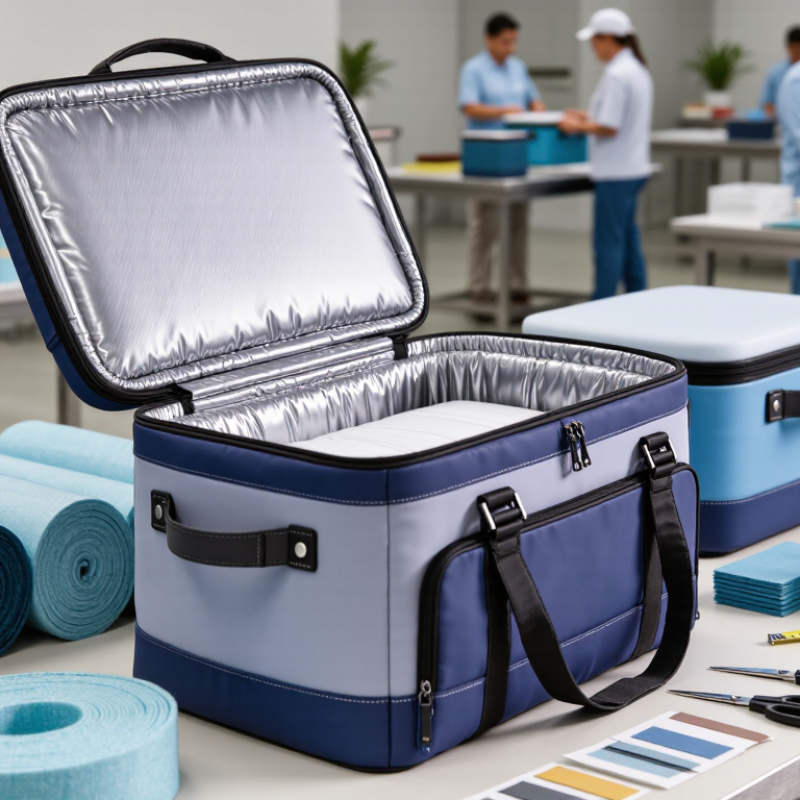
A round cooler bag is a soft-sided insulated carrier with a circular base and a rounded or cylindrical body. Most designs combine an outer fabric shell, foam insulation, and a wipe-clean inner lining. A zippered top helps limit heat exchange, while handles make the bag easier to carry. The shape is distinctive. It can also make packing less straightforward.
These bags suit picnics, beach outings, outdoor lunches, and small gatherings. A round base can hold bowls, cups, or a compact food container without forcing everything into a narrow corner. For a short trip, add pre-chilled drinks and a frozen ice pack; keeping the lid closed helps maintain a cool interior. Check the lining and seams after use, since trapped moisture can cause odors over time.
Size matters. A compact bag may fit a lunch for two, while larger versions can carry snacks and drinks for a group. But a circular footprint may leave unused space in a rectangular car trunk or fridge. That trade-off is easy to overlook. When choosing one, compare usable capacity, insulation thickness, zipper quality, and how the bag sits when full. A soft base may sag under heavy contents, so design claims alone do not tell the whole story.
How Chinese Manufacturers Design and Produce Round Cooler Bags
Designing a round cooler bag begins with its intended use: carrying lunch, drinks, or groceries. Chinese manufacturers translate those needs into dimensions, materials, and construction details. A pattern maker checks how the circular base meets the side panel, since small gaps can affect both shape and insulation. The outer fabric must resist scuffs, while the lining should be easy to wipe clean. Details matter. Designers also consider the zipper path, handle placement, and whether the bag stays upright when partly filled. A sample is usually checked by packing it with containers and testing access to the interior. Some samples look neat on a table but feel awkward to carry.
During production, fabric panels are cut, stitched, and joined with insulation between the outer shell and lining. Workers pay close attention to curved seams, where uneven stitching can create puckers or weak spots. Quality checks may include inspecting the zipper, seam strength, handle attachment, and finished dimensions. These checks help catch defects, but they cannot replace clear product specifications. A bag made thicker for better thermal retention may become heavier and harder to fold. Not every sample works. That trade-off often calls for another round of testing, especially when buyers have specific capacity or packing requirements. Materials and construction should be confirmed before bulk production begins.
Which Materials and Features Affect Bag Quality and Performance?
A round cooler bag’s performance depends on its shell, insulation, liner, and construction. Polyester or nylon can resist scuffs from car trunks and picnic tables, while a coated finish helps shed light spills. Foam insulation slows heat transfer, but lid gaps and stitched seams can reduce its effect. A leak-resistant, easy-to-clean liner is practical after condensation or a tipped drink. Small details matter.
Tips: Check that the zipper moves smoothly around the curved opening. Press the lid and side panels to spot thin areas. Ask for liner material details and test samples with the same load and conditions.
A thicker bag is not always a better cooler. Extra weight may feel reassuring, but it does not prove stronger insulation. For a fair comparison, record how long each sample keeps contents cool in a consistent test. Also inspect handles, base seams, and whether the bag stands upright when partly filled. One overlooked weakness can affect daily use.
Round Cooler Bag Insulation: Typical Thermal Conductivity
Lower thermal conductivity generally means better insulation, when thickness and other conditions are comparable.
Approximate typical values for insulation foams: polyurethane (PU), 0.025 W/m·K; cross-linked polyethylene (XPE), 0.035 W/m·K; expanded polyethylene (EPE), 0.040 W/m·K. Actual values vary with density, temperature, and product construction. Bag performance also depends on insulation thickness, lining, zipper design, and seam quality.
How Global Buyers Can Evaluate and Select a Manufacturer
A round cooler bag can look polished in a catalogue and still leak cold air through a weak zipper or poorly joined base. Ask shortlisted manufacturers for a bill of materials, fabric weight, insulation thickness, and written temperature-test conditions. Request samples from a normal production run, not only a hand-finished sample. Check stitching around the circular base, zipper alignment, lining seams, and handle attachment. Small details matter.
The ISO Survey 2022 reported about 1.26 million valid ISO 9001 certificates worldwide. Certification can indicate documented quality processes, but it does not prove a cooler bag meets your specifications. Documents are only clues. Ask how the factory handles failed inspections, material changes, and corrective actions. Then review inspection records and compare them with your sample. A clear answer matters more than a glossy certificate.
Logistics deserve equal attention. The World Bank’s 2023 Logistics Performance Index covers 139 economies and assesses factors including tracking and shipment timeliness. Ask for production lead times, packaging dimensions, and recent on-time delivery data. Confirm how delays are reported and whether carton packing protects the round shape. I would also test the bag after repeated opening and closing; a single short cooling test may miss everyday weaknesses. No checklist is perfect, and buyers should record what remains uncertain before placing a large order.
What to Check Before Ordering, Shipping, and Importing Cooler Bags
Before ordering round cooler bags, compare the written specification with a physical sample. Check the bag’s diameter, height, handle length, lining thickness, and usable capacity. A bag can look roomy in a photo but feel cramped around a lunch container. Test the zipper and inspect the seams near the handles. Small details matter. Ask how the factory checks insulation and whether the inner lining is tested for leaks. Request clear answers, not just “good quality.” I have seen specifications leave too much room for interpretation.
Confirm the material, color, logo placement, carton quantity, and tolerance for size differences before approving production. Keep photos. Ask for a pre-shipment inspection, especially on a first order, and agree on what happens if measurements or workmanship differ from the approved sample. Shipping estimates should include production time, pickup, transit, and possible port delays. Carton dimensions and gross weight can change freight costs, so request both before booking. Rushed packing plans often cause avoidable confusion.
For importing, ask the supplier for a commercial invoice, packing list, and other documents required by your forwarder. Product classification, duties, and labeling requirements vary by destination; confirm them with a qualified customs broker before shipment. Check that the invoice description matches the goods and quantities. Keep copies of approvals and payment records. One overlooked document can slow clearance, even when the bags are packed correctly.




