
Welcome to Worldia, we have over 25 years of expertise.

How to Choose the Best Off Road Forklift in 2026?

Choosing the best Off Road Forklift in 2026 requires more than comparing lifting capacity and price. Real job sites expose weaknesses quickly. A forklift that performs well on a smooth yard may struggle on gravel, wet clay, or uneven loading areas. Tire design, ground clearance, steering control, and stability deserve close attention. So does operator visibility.

This guide examines these decisions through practical operating experience and current equipment knowledge. It considers rated capacity, lift height, engine performance, braking systems, cabin protection, and attachment compatibility. We also look at fuel use, maintenance access, parts support, and manufacturer reliability. A 5,000-pound rating means little if the machine becomes unstable near its maximum reach. That detail is often overlooked. It should not be.

Conditions matter most. A muddy construction site demands different performance from a dry agricultural yard. A narrow entrance may favor compact dimensions over extra horsepower. Buyers should verify specifications with authorized dealers and review applicable workplace safety requirements. Manufacturer manuals remain essential, even for experienced operators. No checklist is perfect. Unexpected terrain, poor training, or neglected tires can still change the risk. We will question common assumptions and acknowledge where recommendations depend on local conditions. The goal is not to promote one machine blindly. It is to help readers choose dependable equipment, avoid costly mismatches, and operate with greater confidence in 2026.
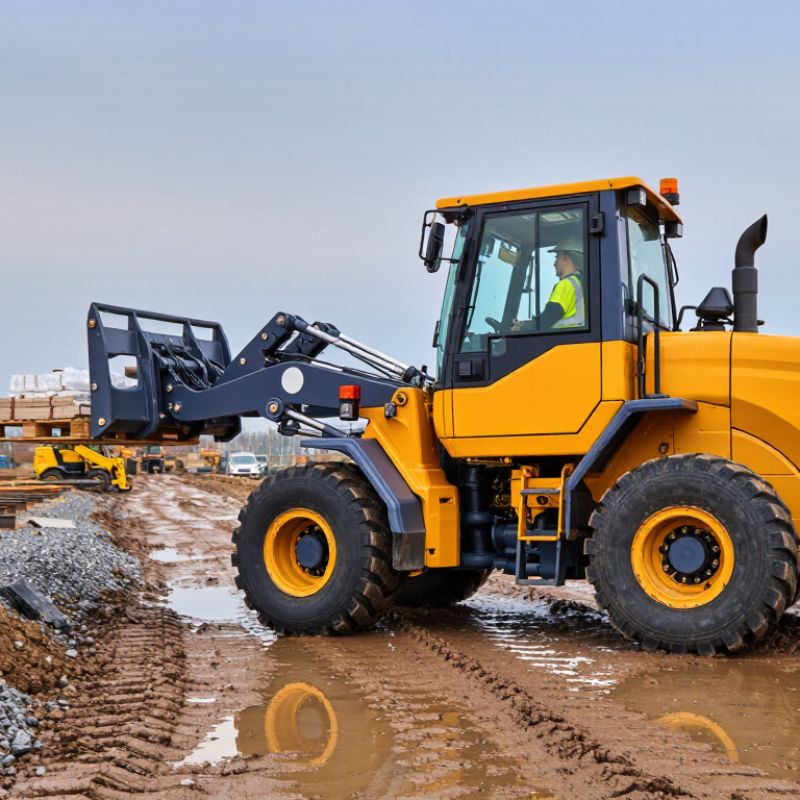
How to Choose the Best Off Road Forklift in 2026?

Classify the Jobsite and Forklift Type Under ANSI/ITSDF B56.6

How to Choose the Best Off Road Forklift in 2026?

Start by classifying the jobsite under ANSI/ITSDF B56.6. Record the surface, slope, clearance, travel distance, and weather exposure. Loose gravel demands different stability than compact concrete. Measure the narrowest gate and the lowest overhead obstruction. Do not trust visual estimates. A few inches can change the equipment choice.

Match the forklift to the actual task. A straight-mast rough-terrain forklift suits heavy loads moved across uneven ground. A variable-reach forklift may fit elevated placement, but reach changes the load center and reduces usable capacity. Check the capacity plate, attachment weight, load dimensions, and lift height together. The heaviest pallet is not always the hardest load. Long or flexible materials can create unexpected balance problems.

Operators should inspect tires, forks, hydraulic lines, alarms, and seat belts before work begins. The site plan should separate pedestrians from equipment and identify blind corners. ANSI/ITSDF B56.6 provides essential safety requirements, but it does not replace operator training, the manufacturer’s instructions, or applicable local rules. In field reviews, clean paperwork sometimes hides poor ground conditions. Recheck the route after rain, grading, or material changes. That extra inspection may feel excessive. It is often the part people skip.

Size Capacity by Load Center, Lift Height, and OSHA Rated-Load Rules

How to Choose the Best Off Road Forklift in 2026?

Off-road forklift selection starts with the real load, not the advertised maximum capacity. A 5,000-pound machine may lift that weight only at its stated load center. If the center moves forward, capacity falls quickly. OSHA 1910.178 requires operators to follow the truck’s rated capacity and data plate. Measure pallet depth, attachment weight, and uneven ground conditions before choosing.

Lift height also changes stability. Raising a bulky load high on a slope can shift the combined center of gravity. ANSI B56.6, the safety standard for rough-terrain forklifts, treats capacity as dependent on load center, mast position, and attachment configuration. Ask for a capacity chart at the exact lift height. Do not rely on the brochure’s headline figure. That shortcut causes trouble.

Worksite experience matters. A 2024 U.S. Bureau of Labor Statistics report recorded 885 fatal occupational injuries involving powered industrial truck incidents from 2011 through 2022. The figure covers varied equipment and events, but it reinforces the need for trained operators and controlled loads. OSHA also requires operator training and evaluation under 1910.178(l). Test the forklift with a representative load, on the roughest planned surface. A careful choice may feel slower. It is usually safer.

Compare 4WD, Ground Clearance, Gradeability, and Tire Data for Terrain

How to Choose the Best Off Road Forklift in 2026?

Choosing an off road forklift starts with the ground, not the engine. I inspect the worksite after rain, when ruts, loose soil, and hidden rocks become obvious. Four-wheel drive helps distribute torque across uneven surfaces. However, it does not guarantee traction on mud or steep, slippery ground. Check whether the system supports continuous traction or only engages when wheels slip.

Ground clearance should be measured at the lowest exposed component, not beneath the chassis alone. A machine may show generous clearance but still scrape its axle housing or battery guard. Gradeability figures also require careful reading. Ratings often assume a firm surface, a specific load, and controlled speed. Test the forklift with the intended load, because a full pallet changes braking distance and steering response. Keep the operator’s view clear on slopes.

Tire data deserves equal attention. Compare tread depth, ply rating, load capacity, diameter, and recommended pressure. Deep lugs can improve grip, but they may mark finished surfaces and increase vibration. Wider tires can reduce ground pressure, although they may struggle in narrow tracks. I once focused too heavily on maximum gradeability and overlooked tire pressure control. That choice looked efficient on paper. It was less convincing after several wet shifts. Field measurements, operator feedback, and maintenance records should challenge the specification sheet before purchase.

Verify Safety Features Against OSHA’s 35,000 Annual Serious-Injury Estimate

Choosing an off-road forklift in 2026 should begin with injury prevention, not lifting capacity. OSHA estimates that powered industrial trucks cause about 35,000 serious injuries annually in the United States. Its safety guidance emphasizes training, inspections, seat restraints, and controlled operating zones. BLS Census of Fatal Occupational Injuries data also tracks recurring forklift-related deaths, showing why safety specifications deserve close review.

Look for a rollover protective structure, an overhead guard, and a properly designed seat belt. These features matter when uneven ground shifts the machine suddenly. Check whether the forklift provides clear load charts, strong lighting, a reversing alarm, and stable all-terrain tires. Hydraulic leak protection and automatic parking brakes can reduce smaller failures that become serious incidents. A wide viewing angle helps operators see workers near blind corners. It is not perfect, though. Extra cameras cannot replace careful positioning.

Tips: Ask the supplier for independent test records, maintenance intervals, and operator training requirements. Test the forklift on gravel, slopes, and wet surfaces before purchase. Measure stopping distance with a realistic load. Confirm that safety devices remain active during normal operation. OSHA notes that many incidents involve poor training or unsafe workplace conditions, not only equipment defects. One overlooked detail is enough. Recheck the risk assessment after seasonal ground changes, because a machine that feels stable in summer may behave differently on frozen soil.

How to Choose the Best Off Road Forklift in 2026? - Verify Safety Features Against OSHA’s 35,000 Annual Serious-Injury Estimate

Use this comparison matrix to match a rough-terrain forklift configuration with the worksite, load, slope, and required safety controls. Capacity and dimensions are typical selection ranges, not a substitute for the manufacturer’s data plate, load chart, operator manual, or site risk assessment.

Off-Road Forklift Profile Typical Rated Capacity Typical Lift Height Terrain and Application Stability and Load-Control Features to Verify Operator-Protection Features to Verify OSHA and Site Verification Checks
Compact rough-terrain forklift 2,000–5,000 lb
(907–2,268 kg)
8–14 ft
(2.4–4.3 m)
Tight outdoor construction areas, landscaping projects, farms, and material movement over firm gravel or packed soil. Load backrest Fork locking pins Wide-tread tires Visible load chart
Verify the rated capacity at the actual lift height and load center.
Seat belt or restraint Overhead guard Horn Backup alarm or warning device Confirm operator training and evaluation under 29 CFR 1910.178(l); inspect the data plate, forks, tires, brakes, steering, horn, and restraint system before use.
Standard rough-terrain forklift 5,000–10,000 lb
(2,268–4,536 kg)
10–20 ft
(3.0–6.1 m)
General construction, lumber handling, utility work, agricultural yards, and uneven outdoor surfaces. High-clearance chassis Self-leveling or tilt control Load backrest Pneumatic tires
Confirm the machine remains within its rated capacity on slopes and uneven ground.
ROPS/FOPS where applicable Seat restraint Mirrors or camera Work lights Apply the requirements of 29 CFR 1910.178 for powered industrial trucks and use additional construction-site controls under 29 CFR 1926.602 where applicable.
Heavy-duty rough-terrain forklift 10,000–20,000 lb
(4,536–9,072 kg)
10–18 ft
(3.0–5.5 m)
Heavy building materials, steel products, concrete components, industrial yards, and large job sites. High-capacity forks Hydraulic load holding Tire-load compatibility Counterweight protection
Check the load center, attachment weight, ground bearing capacity, and tire condition before lifting.
Enclosed operator area Seat restraint Enhanced visibility system Fire extinguisher mounting provision A competent person should verify the travel route, overhead clearance, surface strength, pedestrian separation, and lift plan before operation.
Telehandler with fork carriage 5,000–12,000 lb
(2,268–5,443 kg)
20–55 ft
(6.1–16.8 m)
Elevated placement of pallets, roof materials, framing components, and loads across rough or sloped terrain. Boom load chart Attachment lock Frame leveling Stabilizers where fitted
Use the chart for the exact boom angle, reach, attachment, and load center; do not rely only on the maximum capacity.
Operator restraint ROPS/FOPS Boom-angle and height indicators Rear visibility aids Keep people clear of the suspended or elevated load. Verify whether the planned task falls under applicable construction equipment, lifting, or personnel-platform requirements.
Four-wheel-drive forklift for steep or soft ground 4,000–10,000 lb
(1,814–4,536 kg)
8–18 ft
(2.4–5.5 m)
Mud, sand, loose aggregate, rutted access roads, and outdoor work areas where traction and ground clearance are critical. 4WD traction Differential lock Low center of gravity Slope-rated load chart
Inspect soil stability and operate with the load upgrade or downgrade as required by the operating instructions.
Seat restraint ROPS/FOPS High-visibility lighting Emergency stopping system Establish a site slope limit and travel direction. OSHA requires loads to be kept upgrade when traveling on grades that exceed the stated threshold in the applicable operating rule.
Forklift with removable attachment 2,000–10,000 lb
(907–4,536 kg), depending on attachment
Varies by attachment and mast Pallets, bins, pipe, drums, clamps, hooks, and other loads requiring specialized handling. Attachment data plate Positive locking mechanism Reduced-capacity marking Hydraulic hose protection
Recalculate capacity when an attachment changes weight, load center, or visibility.
Guarded controls Clear sight lines Seat restraint Audible warning device Attachments must be approved for the truck and used according to the attachment and truck instructions. Train operators on the changed capacity and handling characteristics.
Diesel rough-terrain forklift for long outdoor shifts 5,000–12,000 lb
(2,268–5,443 kg)
10–20 ft
(3.0–6.1 m)
Remote construction sites, aggregate yards, farms, and outdoor operations with limited charging infrastructure. Pneumatic tires Cooling-system protection Load backrest Brake performance monitor ROPS/FOPS Seat restraint Backup warning device Work lights Control exhaust exposure, refueling, hot surfaces, and fire risks. Do not use internal-combustion equipment in enclosed areas unless ventilation and emissions controls are suitable.
Electric rough-terrain forklift 3,000–8,000 lb
(1,361–3,629 kg)
8–16 ft
(2.4–4.9 m)
Noise-sensitive outdoor sites, indoor-outdoor transitions, campuses, warehouses, and projects requiring low local emissions. Battery restraint Traction control Load chart Water-resistant electrical enclosure Seat restraint Overhead guard Low-noise warning device Battery-status display Verify battery charging and storage controls, charging ventilation, electrical protection, wet-ground limitations, and safe pedestrian notification methods.
Universal pre-purchase safety gate Must exceed the heaviest planned load at its actual load center Must meet the highest required placement height with a safety margin Applies to every off-road forklift selection before purchase, rental, or deployment. ✓ Confirm data plate and load chart
✓ Inspect forks, mast, chains, hydraulics, tires, brakes, steering, and guards
✓ Verify attachment compatibility and capacity derating
✓ Seat belt or operator restraint
✓ Overhead guard and applicable ROPS/FOPS protection
✓ Horn, warning devices, lights, mirrors or camera
OSHA identifies approximately 35,000 serious forklift injuries annually in its commonly cited safety information. Use documented operator training, daily inspections, maintenance records, traffic controls, pedestrian separation, and a site-specific risk assessment to reduce exposure.
Reference framework: OSHA Powered Industrial Trucks, 29 CFR 1910.178; construction equipment provisions, including 29 CFR 1926.602 where applicable; and the current consensus safety requirements adopted by the applicable truck and site standards. Always follow the specific forklift manufacturer’s instructions, capacity plate, load chart, inspection schedule, and local legal requirements.

Audit Total Cost, Emissions, and Service Data Before Selecting a Model

How to Choose the Best Off Road Forklift in 2026?

Buying an off road forklift requires more than comparing purchase prices. Build a five-year total-cost model with fuel, electricity, tires, batteries, repairs, insurance, training, and resale value. Include transport between uneven worksites. The U.S. Department of Energy’s GREET model can estimate fuel-cycle emissions, while EPA emissions data can refine electricity assumptions by region. Battery prices fell 14% in 2023, according to the International Energy Agency’s Global EV Outlook 2024. That change may improve electric models’ payback, but replacement costs remain uncertain. Do not treat one spreadsheet as truth.

Ask for machine-specific service records, not general promises. Check scheduled maintenance hours, mean time to repair, parts fill rate, technician response time, and average downtime per fault. Request at least three years of anonymized operating data. OSHA estimates that forklifts cause about 85 workplace fatalities and 35,000 serious injuries annually in the United States. Therefore, visibility, braking performance, stability, and operator training belong in the cost audit. They are not optional extras. My first audit would probably underestimate muddy-site tire wear. That is a useful warning. Test the shortlisted model on your actual slope, surface, load, and shift pattern. Measure fuel or energy use per operating hour, hydraulic temperature, daily idle time, and productive lifts. A cheaper machine can become expensive when parts arrive late or service coverage stops beyond city limits.

Hi! What is your idea today?
WORLDIA 8618618272087
Nina +86 15631662072
google-site-verification=0STkOZEvYuoDp-D40AVfMUk--CzM2AsZv24S6ISPdmk