Welcome to Worldia, we have over 25 years of expertise.

How to Choose the Right Cutter Tool for Global Sourcing?

Choosing the right Cutter Tool for global sourcing requires more than comparing prices. The correct choice depends on material, cutting volume, machine compatibility, safety features, and supplier reliability. A tool that performs well on soft packaging may fail quickly on reinforced fabric, rubber, or layered composites. Small differences matter. Blade geometry, edge hardness, handle design, and replacement availability can affect daily production.

Experienced buyers usually begin with a clear cutting specification. They define the material thickness, required accuracy, operating temperature, and expected service life. Then, they request samples and test the tool under realistic conditions. A ten-minute demonstration is not enough. Observe edge wear, operator comfort, cutting consistency, and packaging quality. Ask for material certificates, inspection records, and traceable product information. These details help separate a dependable manufacturer from a polished sales presentation.

Global sourcing also introduces practical challenges. Delivery times, language gaps, customs documents, and after-sales support may influence the final cost. A low unit price can become expensive when spare blades arrive late. This is easy to overlook. It happened in several purchasing reviews I have examined: the tool met the specification, but the replacement system did not. That weakness changed the decision. Buyers should compare total ownership costs, not only quotations. They should also verify factory capabilities through audits, independent inspections, or small trial orders. No sourcing plan is perfect. Careful testing, honest risk assessment, and documented communication create a more reliable path toward selecting the right Cutter Tool.

How to Choose the Right Cutter Tool for Global Sourcing?

Cutter Tool Types and Their Best Industrial Applications

Choosing a cutter tool for global sourcing requires more than comparing prices.
The workpiece material, cutting speed, tolerance, and production volume must guide the decision. A tool cutting aluminum behaves differently from one cutting hardened steel or composite panels. Fit matters. Measure twice.

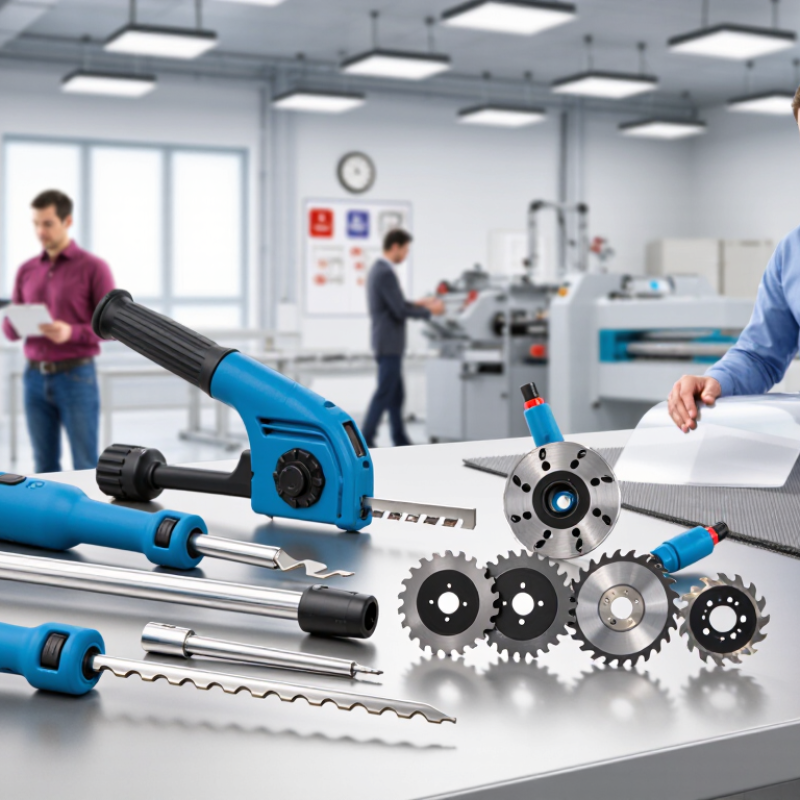
Rotary slitting knives suit continuous sheet, film, and paper processing. Their narrow edges produce clean, repeatable cuts at high production speeds. End mills are better for milling slots, pockets, and contoured surfaces in metal parts. Solid carbide versions handle demanding operations, while high-speed steel can offer practical value for moderate workloads. Band saw blades work well for separating bars, tubes, and structural sections. For abrasive materials, a diamond-grit cutter may last longer than a standard edge. The application decides the type.

During global sourcing, request drawings, material certificates, hardness data, coating details, and inspection records. Edge geometry matters, but so does the machine holding the tool. A rigid spindle can support more aggressive cutting. A flexible setup may need a tougher, less brittle edge. I have seen buyers choose a cheaper cutter, then lose money through vibration, burrs, and frequent replacement. The calculation looked attractive. The workshop results did not. Samples should be tested under real feed rates and cooling conditions before a large order. Small differences in sharpening quality can become visible on every finished component. Communication can also fail across technical languages, so diagrams and measurable acceptance limits are safer than vague terms like premium or long-lasting.

Key Specifications to Compare Before Choosing a Cutter

How to Choose the Right Cutter Tool for Global Sourcing?

Key Specifications to Compare Before Choosing a Cutter

Cutter selection begins with the workpiece, not the catalogue price. Confirm the material hardness, cutting depth, machine speed, and required surface finish. Diameter and flute count affect chip space, feed rate, and tool stability. A small cutter may reach narrow features, but it can deflect under heavy side loads. ISO 13399 supports consistent cutter data exchange, which helps buyers compare specifications across suppliers. Grand View Research valued the global cutting tools market at approximately USD 24 billion in 2023, showing how many technical choices buyers now face.

Material and coating deserve close attention. Carbide usually supports higher cutting speeds than high-speed steel, but it may fracture during unstable setups. Helix angle influences chip evacuation and cutting force. Runout should also be checked with a dial indicator; even a small deviation can create uneven tooth wear. Ask suppliers for measured runout, hardness data, tolerance records, and sample-cut results. A polished product sheet is not enough.

Tips: Build a comparison table before requesting quotations. Include diameter, flute count, helix angle, coating, shank tolerance, recommended speed, feed, and expected tool life. Request test data using your actual material. In my sourcing experience, suppliers sometimes provide ideal laboratory figures. Real production is less tidy. Recheck the numbers under coolant, vibration, and interrupted cuts. Also compare packaging, replacement consistency, and technical response time. The cheapest cutter may become expensive after repeated adjustments and scrap.

How to Match Cutter Materials with Target Production Conditions

How to Choose the Right Cutter Tool for Global Sourcing?

Cutting performance depends on production conditions, not only tool price. Start with the workpiece hardness, abrasiveness, and thermal behavior. High-speed steel suits slower cutting, complex profiles, and short production runs. It is forgiving and easier to resharpen. Carbide handles higher speeds and repeated batches, but it can chip during vibration or interrupted cuts.

Match the cutter material to the machine and coolant system. A coated carbide tool often performs well on hardened steel when the spindle remains stable. Ceramic can manage high heat, but it needs rigid equipment and consistent cutting. It is a poor choice for sudden impacts. For aluminum or abrasive composites, polycrystalline diamond can provide a clean finish and long wear life. It is not suitable for every metal, especially where heat and chemical reactions become severe.

I once selected a cutter by hardness alone. The edge lasted, but the workpiece showed burrs because the feed rate was too low. That result changed our evaluation method. We now request sample cuts, inspect edge wear, and compare cycle time before placing a large order. Supplier data matters, but production evidence matters more. Check dimensional tolerances, coating details, shank accuracy, and replacement availability. Small differences in coolant pressure or fixture stiffness can change the result. A tool that works perfectly in one workshop may fail in another. Test under real conditions.

How to Choose the Right Cutter Tool for Global Sourcing? - How to Match Cutter Materials with Target Production Conditions
Cutter Material Typical Hardness or Wear Property Best-Matched Workpiece Materials Recommended Production Conditions Indicative Cutting-Speed Range* Main Advantages Main Limitations Global Sourcing and Inspection Priorities
High-Speed Steel (HSS) High toughness; typical hardness after heat treatment is approximately 60–67 HRC. Carbon steel, alloy steel, stainless steel, cast iron, aluminum, copper alloys, and plastics. Intermittent cutting, low-to-medium production volume, less rigid machines, manual or general-purpose equipment, and applications where edge toughness is more important than maximum productivity. Approximately 15–40 m/min for steels; higher speeds may be used for aluminum depending on geometry and coating. Tough, relatively easy to regrind, economical for small batches, and tolerant of vibration and interrupted cuts. Lower hot hardness and wear resistance than carbide; generally unsuitable for high-speed production or very hard workpieces. Verify steel grade, heat treatment, cobalt content where specified, hardness consistency, flute geometry, concentricity, and coating adhesion.
Cobalt High-Speed Steel (HSCo) Improved red hardness and wear resistance compared with standard HSS; commonly supplied around 64–70 HRC after heat treatment. Stainless steel, heat-resistant alloys, alloy steel, titanium alloys, and difficult-to-cut materials requiring a tougher edge than carbide. Moderate-speed drilling, milling, tapping, and reaming where cutting loads are variable or machine rigidity is limited. Approximately 20–60 m/min for steels; actual speed depends strongly on tool diameter, coolant, and workpiece grade. Better heat resistance than standard HSS while retaining good toughness and regrinding capability. Still slower and less wear-resistant than carbide; cobalt content increases material cost. Confirm cobalt-bearing tool material, heat-treatment condition, runout, edge preparation, surface finish, and dimensional consistency between batches.
Cemented Carbide Very high hardness and wear resistance; typical hardness is approximately 1,300–2,000 HV, depending on grade and binder content. Steel, stainless steel, cast iron, non-ferrous metals, composites, wood-based materials, and many hardened materials below the grade limit. Rigid CNC machines, high-volume production, stable workholding, high cutting speed, and applications requiring long tool life and consistent dimensions. Approximately 80–250 m/min for steels; often 200–1,000 m/min for aluminum and other non-ferrous alloys, depending on geometry and coating. High productivity, strong wear resistance, good dimensional stability, and wide availability in many grades and geometries. More brittle than HSS; sensitive to vibration, impact, poor runout, incorrect clamping, and interrupted cuts. Check carbide grade, binder percentage, grain size, substrate uniformity, coating composition, edge preparation, runout, and batch-to-batch tool life.
Cermet High hardness and chemical wear resistance, with lower toughness than conventional carbide. Carbon steels, alloy steels, and selected stainless steels in finishing or light semi-finishing operations. Continuous cuts, rigid machines, stable workholding, low-to-moderate cutting forces, and applications requiring excellent surface finish and predictable edge wear. Approximately 150–400 m/min for suitable steel finishing operations. Excellent surface finish, strong resistance to built-up edge on many steels, and good dimensional consistency in continuous cutting. Poorer impact resistance than carbide; not ideal for interrupted cuts, heavy roughing, unstable setups, or highly shock-loaded operations. Confirm intended workpiece range, edge preparation, fracture resistance, surface finish capability, and test results under continuous-cut conditions.
Ceramic Extremely high hot hardness and wear resistance; ceramic grades are generally much more brittle than carbide. Hardened steels, cast iron, nickel-based heat-resistant alloys, and selected high-temperature materials. Very rigid CNC equipment, stable workholding, continuous or lightly interrupted cuts, high-speed machining, and controlled thermal conditions. Approximately 300–1,000 m/min for cast iron or suitable hardened-steel applications; lower values may be required for nickel alloys. Maintains hardness at high temperatures and can deliver high material-removal rates in appropriate applications. Brittle; vulnerable to impact, vibration, thermal shock, interrupted cuts, and poor machine rigidity. Coolant strategy must be carefully controlled. Verify ceramic grade, thermal-shock resistance, recommended coolant policy, edge security, machine rigidity, and application-specific trial data.
Cubic Boron Nitride (CBN) Extremely high hardness and thermal stability; second only to diamond among commonly used cutting-tool materials. Hardened steels typically above approximately 45 HRC, chilled cast iron, powder-metallurgy alloys, and selected sintered materials. Hard turning, continuous finishing, and selected interrupted cuts when the insert grade and edge preparation are properly matched. Approximately 100–300 m/min for hardened steels; the correct value depends on hardness, insert content, depth of cut, and cutting mode. Enables hard machining, reduces or eliminates some grinding operations, and provides high wear resistance in suitable ferrous materials. High purchase cost; unsuitable for many soft or sticky materials and sensitive to incorrect geometry, excessive impact, and unstable setups. Confirm CBN content and grade, substrate design, edge preparation, workpiece hardness range, runout, and documented hard-turning performance.
Polycrystalline Diamond (PCD) Extremely high abrasive-wear resistance and very high hardness; chemically unsuitable for prolonged high-temperature cutting of ferrous metals. Aluminum alloys, copper alloys, graphite, carbon-fiber-reinforced polymer, glass-fiber-reinforced polymer, wood composites, and other abrasive non-ferrous materials. High-speed finishing, abrasive composite machining, non-ferrous production, and applications requiring long edge life and excellent surface quality. Approximately 300–2,000 m/min for aluminum and composites, depending on tool geometry, abrasive content, and machine capability. Exceptional wear resistance, long tool life, excellent surface finish, and strong performance on abrasive non-ferrous and composite materials. Expensive; vulnerable to impact and unsuitable for conventional ferrous-steel cutting because diamond reacts with iron at elevated cutting temperatures. Check diamond layer quality, edge integrity, braze or joint security, runout, balance, chip-control geometry, and compatibility with the target material.
Coated Cutting Tool Performance depends on the substrate and coating system; coatings commonly improve wear resistance, oxidation resistance, or lubricity. Steel, stainless steel, cast iron, aluminum, and selected high-temperature alloys, provided the coating is matched to the workpiece and cutting mode. Medium- to high-volume production where longer tool life, higher cutting speed, or reduced friction justifies additional tool cost. Typically 20–50% higher than an equivalent uncoated tool in suitable applications, but the actual increase must be validated by testing. Better resistance to flank wear, crater wear, oxidation, and built-up edge when the coating is correctly selected. A coating cannot compensate for a weak substrate, incorrect geometry, poor coolant control, or unstable machining conditions. Identify coating family, thickness, substrate, adhesion, edge treatment, coating uniformity, and performance data using the same machine and workpiece conditions.
* Cutting-speed figures are indicative starting ranges rather than universal settings. Final parameters should be selected from the tool supplier’s grade-specific recommendations and validated against workpiece hardness, tool diameter, depth of cut, feed, coolant, machine rigidity, and workholding stability.

Supplier Evaluation, Quality Checks, and Compliance Requirements

Choosing the right cutter tool for global sourcing begins with evaluating the supplier, not the product photograph. Request factory details, production capacity, inspection procedures, and recent quality records. A reliable supplier should explain material grades, hardness ranges, coating processes, and tool-life testing without vague promises.

Ask for samples from the same production line used for bulk orders. Inspect cutting edges under magnification. Check dimensions with calibrated gauges, and record runout, balance, surface finish, and packaging condition. Test the cutter on the intended material and compare wear after a fixed number of cuts. Small differences matter. I once accepted a sample after a quick visual check, but the production batch showed uneven edges. That shortcut was a mistake.

Compliance needs documented evidence. Confirm applicable product safety rules, restricted-substance requirements, labeling duties, export paperwork, and local import standards for each destination. Request material declarations, test reports, certificates, and traceability records tied to batch numbers. Documents should come from competent testing bodies and match the actual tool specification. A supplier that refuses routine verification creates avoidable risk. Keep inspection criteria in the purchase agreement, including tolerance limits, sampling levels, corrective-action deadlines, and the right to reject inconsistent goods. Paperwork alone is not enough. Suppliers can provide polished files while process control remains weak. Recheck critical details before shipment.

How to Choose the Right Cutter Tool for Global Sourcing?

This recommended evaluation model assigns a 100-point score across supplier capability, quality verification, and compliance readiness. Confirm the applicable technical standards, material certificates, inspection records, and destination-market requirements before placing an order.

Cost, Logistics, and Risk Factors in Global Cutter Sourcing

How to Choose the Right Cutter Tool for Global Sourcing?

A low cutter price can hide expensive logistics and quality risks. In sourcing reviews, I have seen a cheaper tool arrive two weeks late because its packaging failed inspection. That delay stopped a production line and erased the original savings. UNCTAD’s Review of Maritime Transport reports that more than 80% of global merchandise trade moves by sea. Therefore, calculate freight, insurance, customs handling, and port delays before approving a supplier.

Material choice also affects total cost. A hardened tool may cost more upfront, but it can reduce replacement frequency and operator downtime. Ask for cutting-life data under your actual material, speed, and feed conditions. Do not rely only on laboratory results. The World Bank’s Logistics Performance Index highlights customs efficiency, infrastructure, and shipment reliability as major logistics factors. These details matter when comparing sourcing regions. McKinsey estimates that supply-chain disruptions can place 45% of one year’s profits at risk over a decade. That figure may feel broad, but the warning is practical.

Tips: Request two samples from different production batches. Confirm edge tolerance, coating thickness, packaging strength, and replacement lead time. Use a landed-cost sheet, not a unit-price table. Keep a backup source, even when the first supplier performs well. I would also leave room for mistakes. Forecasts are never perfect, and emergency inventory may be cheaper than a missed production window.

Hi! What is your idea today?
WORLDIA 8618618272087
Nina +86 15631662072
google-site-verification=0STkOZEvYuoDp-D40AVfMUk--CzM2AsZv24S6ISPdmk