How to Choose a Manual Ceramic Coffee Grinder?
Choosing a Manual Ceramic Coffee Grinder is not simply a matter of finding the lowest price. It affects grind consistency, brewing time, flavor clarity, and everyday convenience. The Specialty Coffee Association identifies grind size as a major variable in coffee extraction. Its brewing research also shows that small changes can alter balance, strength, and perceived sweetness. The International Coffee Organization reported global coffee consumption of about 177 million 60-kilogram bags in 2022/23. That scale reflects a serious market, but it does not make every grinder suitable for every drinker.
Coffee educator James Hoffmann has said, “The grinder is the most important piece of equipment in your coffee setup.” His point remains practical. A ceramic burr can resist heat during slow hand grinding, while its adjustment range determines whether beans suit pour-over, French press, or finer brewing methods. Hold one in your hand. Notice the handle movement, burr alignment, and container grip. These details matter more than attractive packaging.
Still, ceramic burrs are not automatically better. They may grind more slowly, and cheaper models can produce uneven particles. That weakness is easy to overlook. This guide examines burr material, adjustment control, capacity, durability, cleaning, and real user experience. No single grinder wins every test. Your coffee method, hand strength, travel habits, and patience should guide the final choice. Expect useful evidence, but leave room for personal taste.
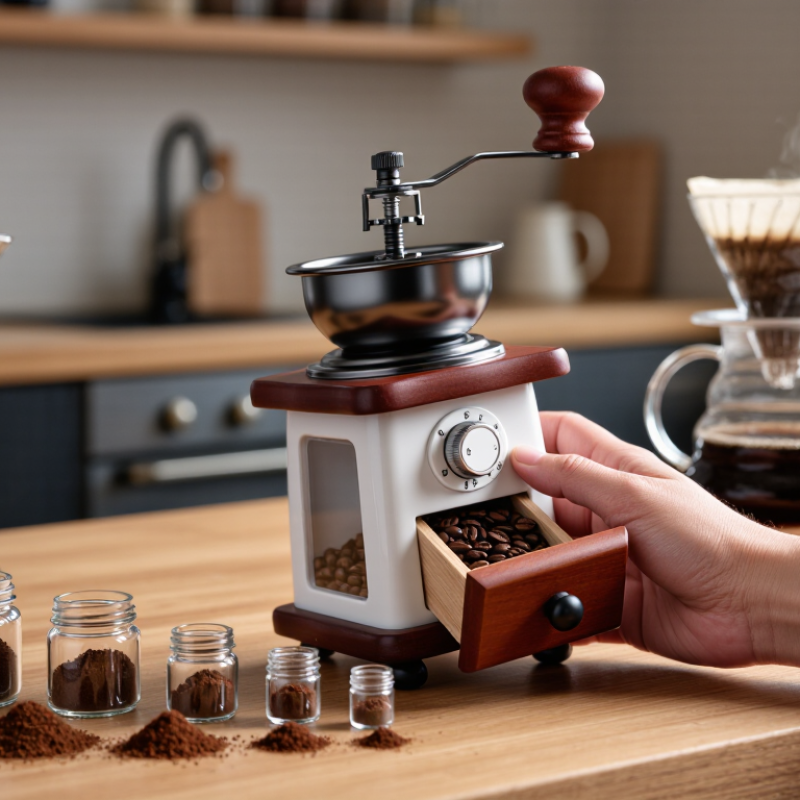
Define Your Brewing Needs and Grinder Use Cases
Choosing a manual ceramic coffee grinder starts with your brewing routine, not its appearance. The National Coffee Association’s Spring 2024 report found that 67% of American adults drank coffee the previous day. Many drinkers also prepare coffee at home, so one grinder may serve several daily methods.
For pour-over, select a grinder with consistent medium-fine adjustment and enough range for small corrections. A typical 15–20 gram dose should not feel exhausting to grind. For French press, use a stable coarse setting and check whether the adjustment mechanism stays secure. Espresso-style brewing demands very fine, repeatable settings, but many manual grinders struggle there. Ceramic burrs resist corrosion and suit travel, although they can feel slower with dense roasted beans.
Your use case changes the best choice. A commuter may value a compact body, low weight, and easy cleaning. A household brewer may need a larger capacity and faster rotation. The Specialty Coffee Association’s water and extraction guidance shows that grind size strongly affects brewing control, alongside dose, water, and time. That is why adjustment precision matters more than a high burr count.
Test your workflow honestly. Does the handle slip? Does the grind feel uneven? I once preferred a lighter grinder, then disliked its slower performance every morning. Convenience won. Keep it simple. Choose the model that matches your actual brewer, dose, and patience, not an imagined coffee ritual. (Sources: National Coffee Association, National Coffee Data Trends, Spring 2024; Specialty Coffee Association, Brewing Research and Standards.)
How to Choose a Manual Ceramic Coffee Grinder?
Define your brewing needs and grinder use cases by comparing the approximate target particle size for each common brewing method.
These values are practical starting points rather than fixed rules. Espresso generally needs the finest grind, while French press and cold brew require coarser particles. Choose a ceramic grinder with enough adjustment range and consistent burr alignment for the brewing methods you use most often.
Compare Ceramic Burr Designs, Materials, and Grinding Performance
Choosing a manual ceramic coffee grinder starts with its burr design, not its appearance. Conical ceramic burrs usually suit home brewing because they need less force and guide beans steadily downward. Flat ceramic burrs can produce a more uniform grind, but they often require tighter alignment and more careful assembly. Small differences matter. A loose shaft can ruin an otherwise excellent burr set.
Ceramic is naturally resistant to rust and corrosion. It also transfers little heat during slow hand grinding. This helps protect delicate aromas, especially when preparing light-roasted beans. However, ceramic is harder but more brittle than hardened steel. A dropped grinder or a stray stone in the beans may chip the burr. I once blamed the burr for uneven grounds, then discovered the adjustment ring had shifted.
Grinding performance depends on more than burr material. Check the adjustment system, axle stability, and the space between rotating surfaces. A good grinder should move smoothly, without sudden scraping or excessive wobble. Test it with the same beans at several settings. Look for a balanced mixture, not only fine powder and large fragments. For pour-over coffee, consistent medium grounds are valuable. For a slower immersion brew, a wider particle range may still work.
Hand comfort matters too. A narrow handle can feel tiring after several minutes. A firm grip helps maintain steady speed. My practical preference is a ceramic conical burr with clear clicks and minimal shaft movement. It is not perfect, though. Even a well-made grinder may need occasional recalibration as the burrs wear.
Choose the Right Grind Settings for Different Coffee Methods
A manual ceramic coffee grinder should change easily between brewing methods. Grind size controls water contact time, flow, and flavor balance. The Specialty Coffee Association recommends an extraction yield of 18–22% for brewed coffee, with about 1.15–1.35% TDS. These figures are useful targets, not rigid laws.
For pour-over, begin with a medium grind, similar to fine sand. Water should pass through the bed in roughly two to four minutes. If the cup tastes sharp and thin, use a finer setting. If it tastes dry or harsh, move coarser. Ceramic burrs can produce consistent particles, but hand grinding speed still affects results. My practical mistake was changing grind size and pouring speed together. That made diagnosis difficult.
Use a medium-coarse grind for French press, like rough sea salt. Steep for four minutes, then press gently. Choose a fine grind for moka pot, but avoid powdery particles that slow flow. Espresso requires a much finer setting and careful adjustment. The National Coffee Association’s 2024 National Coffee Data Trends report found that 67% of American adults drank coffee the previous day, showing how widely brewing habits vary. Record clicks, dose, water temperature, and taste. A setting that works today may fail tomorrow because of humidity, roast age, or uneven beans. Fine-tuning takes patience.
Evaluate Capacity, Adjustability, Durability, and Ease of Use
When choosing a manual ceramic coffee grinder, start with capacity. The NCA’s Spring 2024 National Coffee Data Trends report found that 67% of American adults drank coffee the previous day. Many people still brew one or two cups, so a 20–30 gram chamber is usually practical. It keeps beans fresh and reduces unnecessary grinding. Larger chambers suit families, but they make the grinder heavier. I once underestimated this detail. A full grinder can feel awkward before breakfast.
Adjustability matters more than a long setting list. Choose a stable dial with clear steps, especially for switching between pour-over, French press, and espresso-style brewing. The Specialty Coffee Association’s brewing standards stress repeatable control over key variables, including grind size. Ceramic burrs can produce less heat during slow hand grinding, but they do not guarantee uniform particles. Test the adjustment ring. It should move firmly, without rattling or confusing gaps.
Durability depends on more than the burr material. Look for a metal shaft, supported bearings, secure threads, and a handle that does not flex. SCA equipment guidance consistently emphasizes repeatability and maintenance in brewing workflows. Cleanable parts matter because old coffee oils create stale aromas. Ease of use is equally practical: a rubber grip, balanced body, and removable inner burr reduce daily frustration. Very compact designs save storage space, yet may require more rotations. That trade-off is easy to miss.




