Top 10 Polymer Surge Arrester Manufacturers Worldwide?
Choosing the world’s leading Polymer Surge Arrester manufacturers requires more than comparing sales figures. It demands attention to field experience, testing discipline, material quality, and long-term grid performance. A polymer housing may look simple, yet its reliability depends on sealing, shed design, zinc-oxide blocks, pollution resistance, and installation accuracy.
Dr. Vladimir Gurevich, a recognized researcher in overvoltage protection, emphasizes a practical principle: “Protection begins with understanding the overvoltage, not merely selecting the arrester.” This view is especially important when comparing global manufacturers. A reliable supplier should explain its continuous operating voltage, energy-handling capability, aging tests, and failure-performance data. Marketing language alone is not enough.
This overview examines ten influential Polymer Surge Arrester manufacturers worldwide. The comparison considers product range, manufacturing experience, certification, research investment, utility references, and suitability for demanding environments. Coastal substations, dusty industrial plants, and high-altitude networks can expose weak designs quickly. Small details matter, such as a poorly fitted connector or moisture entering beneath a polymer shed.
The ranking is informative, not absolute. Regional standards and project conditions can change the result. Some manufacturers publish extensive test evidence, while others provide less detail. That difference deserves careful reflection. Buyers should verify current certifications, technical drawings, warranty terms, and local service capability before making a final decision. A strong brand is valuable, but the correct arrester must still match the system.
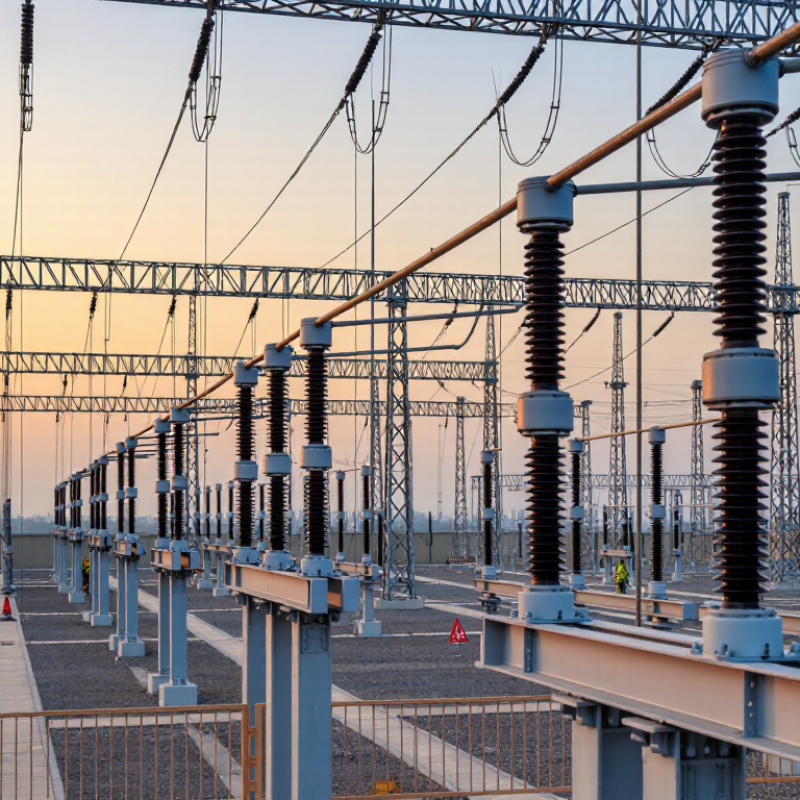
What Are Polymer Surge Arresters and How Do They Work?
Polymer surge arresters protect electrical equipment from lightning and switching overvoltages. They use zinc-oxide metal-oxide varistors inside a weather-resistant silicone housing. Under normal voltage, the varistors conduct only tiny leakage current. During a surge, their resistance falls sharply. The arrester then diverts current toward ground and limits the voltage reaching transformers, cables, and switchgear. That is the core action.
IEC 60099-4 specifies testing with an 8/20 microsecond current impulse, representing common surge conditions. It also evaluates thermal stability, leakage current, and energy-handling capability. IEEE C62.11 uses comparable performance principles for metal-oxide arresters. These tests are not decorative paperwork. A poorly matched arrester can fail during repeated surges, especially near coastal or industrial sites. Short pulses matter.
Recent industry outlooks continue to identify grid expansion, renewable generation, and aging infrastructure as major demand drivers for surge protection equipment. The International Energy Agency’s Electricity 2024 report also projects strong growth in global electricity demand through 2026, increasing pressure on distribution networks. More connected equipment means more sensitive failure points. Yet selection is not foolproof. Engineers must check continuous operating voltage, temporary overvoltage, altitude, pollution severity, and grounding resistance. A polymer housing may resist moisture and contamination well, but installation quality still decides much of the result. A small grounding mistake can turn a technically compliant device into an expensive weak point.
Key Criteria for Comparing Global Polymer Surge Arrester Manufacturers
Comparing global polymer surge arrester manufacturers requires more than checking voltage ratings. Start with compliance against IEC 60099-4 or IEEE C62.11. These standards support consistent tests for residual voltage, energy capability, and thermal stability. Confirm whether reported values come from independent laboratories. Factory claims alone are insufficient.
Material quality matters in harsh outdoor service. Look for silicone-polymer housing performance, sealed interfaces, ultraviolet resistance, and hydrophobicity retention. Review aging tests involving salt fog, humidity, temperature cycling, and mechanical loads. CIGRE technical guidance highlights pollution and moisture as major contributors to arrester deterioration. The World Energy Investment 2024 report also estimates annual global grid investment must rise from about 400 billion dollars to 600 billion dollars by 2030. That expansion increases demand, but it may also encourage rushed purchasing.
Tips: Request ten-year failure records, not only brochures. Compare the same MCOV, discharge class, and installation altitude. Ask for test photographs and calibration dates. A low price still tempts buyers. Yet missing data can cost more later. Manufacturing capacity, delivery stability, warranty terms, and local technical support should be scored separately. One weakness remains easy to overlook: laboratory performance may not represent dust, ice, or repeated switching in the actual network. Require field references from comparable climates, then review the evidence with an experienced protection engineer.
Top 10 Polymer Surge Arrester Manufacturers Worldwide
Polymer surge arresters now sit at the center of modern medium- and high-voltage protection. Grand View Research estimates the global surge arrester market will expand steadily through 2030, supported by grid upgrades and renewable-power connections. MarketsandMarkets also identifies utility modernization and industrial electrification as major demand drivers. These reports suggest why the top ten manufacturers worldwide compete on more than production volume.
A practical ranking should examine IEC 60099-4 compliance, reference voltage ranges, energy capability, and long-term sealing performance. Field engineers often inspect a 33 kV feeder after storms, checking housing cracks, contamination marks, and leakage-current trends. Polymer housings reduce weight and improve resistance to shattering. They can still age under ultraviolet exposure, salt fog, and repeated thermal stress. Small details matter.
The leading manufacturers typically provide arrester designs for substations, transformers, railway systems, and renewable-energy plants. Their technical documentation should show ageing tests, short-circuit behavior, and quality-control traceability. Some market tables rank companies by revenue, while others emphasize installed capacity or regional sales. The result is not perfectly comparable. A manufacturer with fewer sales may offer stronger performance in coastal networks. Buyers should question rankings that hide test conditions, warranty limits, or after-sales support. Even reliable products need correct grounding and coordinated insulation protection.
Top 10 Polymer Surge Arrester Manufacturers Worldwide | Rank | Manufacturer Profile | Primary Manufacturing Region | Typical Maximum Continuous Operating Voltage | Nominal Discharge Current | Polymer Housing Design | Commonly Supported Standards | Typical Applications |
| 1 | Profile A | North America | 3–245 kV | 10 kA and 20 kA | Silicone rubber, direct-molded or bonded | IEEE C62.11; IEC 60099-4 | Transmission substations, distribution feeders, transformer protection |
| 2 | Profile B | Western Europe | 6–420 kV | 10 kA and 20 kA | High-temperature-vulcanized silicone rubber | IEC 60099-4; IEC 60815 | High-voltage substations, overhead lines, cable terminations |
| 3 | Profile C | East Asia | 3–550 kV | 5 kA, 10 kA and 20 kA | Silicone rubber with sealed metal-oxide blocks | IEC 60099-4; IEEE C62.11 | Utility grids, renewable-energy substations, railway electrification |
| 4 | Profile D | Central Europe | 3–300 kV | 10 kA and 20 kA | Porcelain-free silicone composite housing | IEC 60099-4; IEC 62271-1 | Medium-voltage switchgear, substations, industrial networks |
| 5 | Profile E | South Asia | 3–245 kV | 5 kA, 10 kA and 20 kA | UV-resistant silicone rubber, shed-profile design | IEC 60099-4; IS 3070 where applicable | Distribution systems, solar plants, wind farms, industrial plants |
| 6 | Profile F | Northern Europe | 12–420 kV | 10 kA and 20 kA | Hydrophobic silicone rubber with pressure-relief design | IEC 60099-4; IEC 60815 | Coastal substations, transmission systems, offshore wind connections |
| 7 | Profile G | East Asia | 3–800 kV | 10 kA and 20 kA | Silicone composite with graded field-control structure | IEC 60099-4; IEEE C62.11 | Extra-high-voltage transmission, GIS interfaces, large substations |
| 8 | Profile H | Southern Europe | 3–245 kV | 5 kA and 10 kA | Silicone rubber with reinforced fiberglass core | IEC 60099-4; IEC 60815 | Distribution transformers, railway systems, commercial power networks |
| 9 | Profile I | Middle East | 12–420 kV | 10 kA and 20 kA | Pollution-resistant silicone rubber with extended creepage distance | IEC 60099-4; IEC 60815 | Desert substations, oil and gas facilities, utility transmission networks |
| 10 | Profile J | Latin America | 3–245 kV | 5 kA, 10 kA and 20 kA | Silicone rubber with corrosion-resistant end fittings | IEC 60099-4; IEEE C62.11 | Hydroelectric plants, distribution grids, mining and heavy industry |
Technical ranges are representative product specifications commonly used in the global polymer surge arrester market. Actual ratings, creepage distances, energy-class requirements and certification availability should be verified against the applicable manufacturer datasheet and project specification.
How to Select the Right Polymer Surge Arrester Manufacturer
Selecting the right polymer surge arrester manufacturer requires more than comparing catalog prices. Start with the electrical system: rated voltage, continuous operating voltage, temporary overvoltage, and expected discharge current. A responsible manufacturer should explain each value clearly. Ask for test evidence aligned with IEC 60099-4 or the applicable regional standard. Vague certificates are warning signs.
Examine the polymer housing closely. It should resist ultraviolet exposure, moisture, pollution, and mechanical stress. Look for stable sealing, uniform sheds, and documented aging tests. The internal metal-oxide varistor blocks also deserve attention. Their energy capability, leakage-current control, and thermal stability affect service life. Request routine test records, batch traceability, and sample inspection results. Good manufacturers welcome detailed questions.
Field experience matters. Ask where similar arresters operate, how failures are investigated, and whether technical support remains available after delivery. A manufacturer with disciplined quality control can provide drawings, installation guidance, and clear warranty conditions. Response time matters during a fault.
Do not trust glossy brochures alone. I have seen low prices hide weak documentation and inconsistent dimensions. Still, expensive equipment is not automatically better. Compare total ownership cost, including testing, transport, replacement access, and maintenance. One detail is easy to overlook: confirm terminal compatibility before purchase. A technically excellent arrester may still become a poor choice when installation changes are required. Supplier selection should remain evidence-based, but practical judgment is never perfect. Review the decision again after field feedback.




