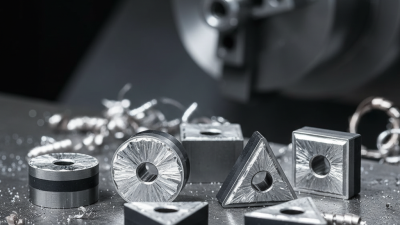
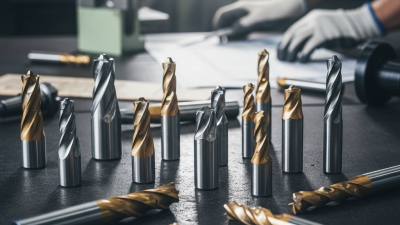
Choosing a PCD Milling Cutter supplier is not simply a price comparison. Buyers must match tool geometry, diamond grade, and edge preparation to the workpiece and machine. Aluminum alloys, graphite, and carbon-fiber composites each create different cutting demands. A cutter that performs well on one material may disappoint on another.
Professor Shreyes Melkote is a manufacturing researcher whose work concerns machining and precision processes. No source was provided to verify a direct quotation from him, so the following is an editorial summary, not his verbatim words: “A reliable tool choice begins with the material, the cutting conditions, and the quality target.” It is a practical reminder. Small details matter.
This guide compares ten suppliers serving global buyers, with attention to product range, customization, technical support, and export readiness. Look beyond polished catalogs. Ask about runout tolerances, coating or edge options, sample testing, and the recommended cutting parameters. A clear answer can reveal more than a broad performance claim. So can a slow, careful review of the quotation.
Supplier capabilities vary. Some specialize in standard cutters; others support custom profiles and application engineering. Delivery time, communication, and after-sales support also affect the real cost of ownership. No ranking can replace a controlled trial on your own machine. Use this list to identify candidates, then verify specifications and test results before placing a production order.
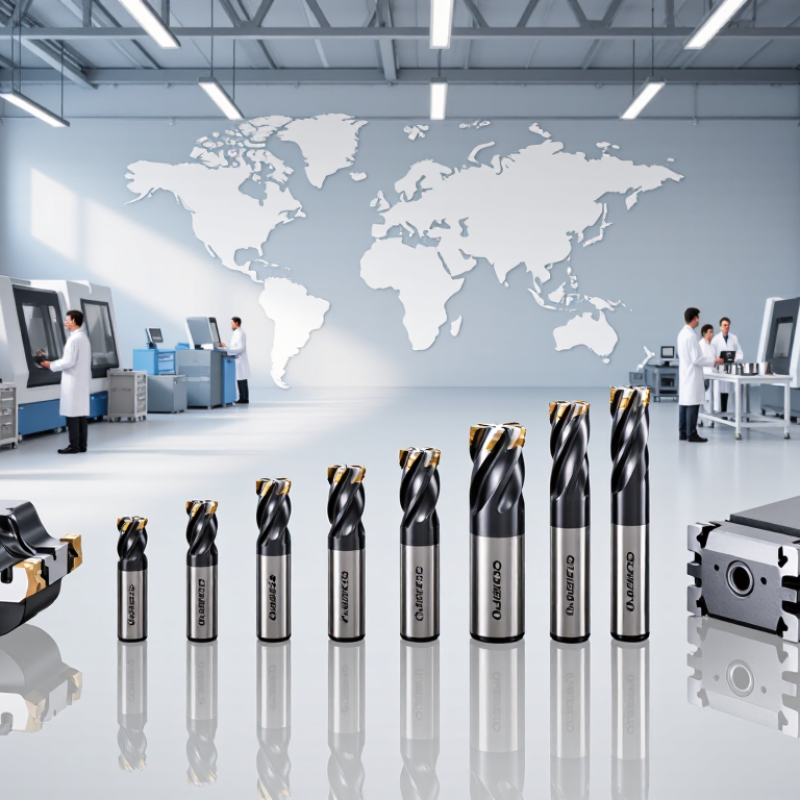
Polycrystalline diamond (PCD) milling cutters use many diamond grains bonded to a carbide support. The diamond edge resists abrasive wear and keeps its shape during high-volume machining. It is commonly selected for aluminum alloys, copper, graphite, and fiber-reinforced composites. Typical jobs include trimming composite panels, milling aluminum housings, and finishing parts with abrasive fillers.
The USGS Mineral Commodity Summaries 2025 estimates that global primary aluminum production reached about 72 million metric tons in 2024. That scale helps explain the demand for productive aluminum machining, though it does not measure PCD tool use directly.
PCD is not a universal solution. Its use on ferrous metals is generally limited because heat and chemical interaction can accelerate diamond wear. ISO 513:2012 classifies cutting-tool materials and provides a useful framework for matching materials to applications; actual tool choice still depends on workpiece grade, cutting speed, coolant, and edge geometry.
Small details matter. A slightly blunt edge can damage composite fibers, while an unsuitable chip load may leave burrs on aluminum.
One limitation deserves attention: published tool-life figures are difficult to compare unless test conditions match. Buyers should verify application data with controlled trials, especially when switching materials or production settings.
Choosing a PCD milling cutter supplier takes more than comparing prices. Start with your workpiece material, cutter diameter, flute design, and required finish. Ask how the supplier controls cutting-edge geometry and runout. Small details matter. A few microns of runout can affect surface quality and tool life, especially during precise finishing. Request drawings and inspection records for the tool you plan to buy, not just a general capability sheet.
Check whether the supplier can discuss your actual cutting conditions, including spindle speed, feed rate, and coolant use. Useful guidance should reflect the workpiece and machine, rather than promise one tool will suit every job. Ask for a sample cutter or a clearly defined trial plan. Compare edge condition, chip evacuation, and wear after machining. A polished catalog can still leave gaps; I would treat broad performance claims cautiously until a test supports them. Also confirm lead times, regrinding options, and how technical issues are handled after delivery.
PCD milling cutter supply spans diamond-powder producers, tool manufacturers, and regional distributors. Their capabilities differ. Some make cutters to drawings, while others focus on standard geometries and quick delivery. The U.S. Geological Survey’s Mineral Commodity Summaries 2024 estimated global synthetic industrial diamond output at roughly 15 billion carats in 2023. This measures upstream material, not PCD tooling capacity. MarketsandMarkets’ 2023 cutting-tools study projected the broader market would grow from USD 23.5 billion in 2022 to USD 35.5 billion by 2028. That forecast includes many tool types, so it should not be read as PCD-specific demand.
For global buyers, supplier location matters less than process control and support. Ask how the maker controls edge preparation, brazing, runout, and cutter balance. Request sample inspection records and machining trials using your material, feed rate, and spindle speed. A cutter that performs well on aluminum may behave differently on abrasive composites. A low quote can look convincing. It may not include regrinding, custom geometry, or reliable delivery. There is no perfect scorecard. Buyers should compare tool life and surface finish against total cost per part, then check whether technical support is available across time zones. Short lead times help, but consistent batches matter more.
The entries below are anonymized supplier profiles, not named companies or a verified ranking. They summarize common supplier types and product capabilities; actual specifications, certifications, lead times, and availability should be confirmed directly with each supplier.
| Supplier Profile | Common PCD Milling Products | Typical Workpiece Materials | Typical Buyer Fit | Key Checks Before Ordering |
|---|---|---|---|---|
| 1. Dedicated PCD Tool Specialist | Custom PCD end mills, face mills, and profile cutters | Aluminum alloys, copper alloys, graphite, and selected composites | Manufacturers seeking application-specific geometry and edge preparation | Confirm tool drawings, cutting-edge geometry, runout requirements, and reconditioning options |
| 2. Carbide Toolmaker with a PCD Product Line | PCD-tipped milling cutters alongside solid-carbide tooling | Non-ferrous metals and abrasive non-metallic materials, depending on tool design | Buyers consolidating carbide and PCD tooling purchases | Check whether PCD design and production are handled in-house or through an external partner |
| 3. Custom Tooling and Engineering Provider | Special-profile PCD cutters designed around a customer component | Aluminum components, engineered plastics, and composite parts | Production teams with complex profiles or difficult-to-machine features | Provide component drawings, material grade, machine details, and target process conditions |
| 4. Composite-Machining Tool Supplier | PCD routers, end mills, and cutters for composite machining | Carbon-fiber-reinforced and glass-fiber-reinforced materials | Aerospace, transport, and industrial composite processors | Verify tool suitability for the specific laminate, cutting direction, and dust-control setup |
| 5. Non-Ferrous Metal Tool Supplier | PCD milling cutters optimized for non-ferrous metal cutting | Aluminum, copper, and certain non-ferrous alloys | High-volume machining operations focused on surface finish and tool life | Confirm compatibility with the alloy, required finish, coolant method, and machine spindle |
| 6. Graphite and Abrasive-Material Tool Supplier | PCD end mills and profile tools for abrasive workpieces | Graphite and other suitable abrasive non-metallic materials | Electrode and precision-part manufacturers | Ask about edge design, wear expectations, dust management, and available tool dimensions |
| 7. Precision Regrinding and Reconditioning Provider | Reconditioned PCD milling cutters and sharpening services | Materials compatible with the original cutter design | Buyers seeking to extend tool service life or manage tooling costs | Establish inspection criteria, allowable regrind cycles, dimensional limits, and turnaround time |
| 8. OEM and Private-Label Tooling Manufacturer | Made-to-spec PCD cutters for distributor or equipment programs | Application-dependent; commonly includes non-ferrous metals and composites | Distributors and manufacturers requiring repeatable, specification-based supply | Review quality-control documentation, drawing control, lot traceability, and intellectual-property terms |
| 9. Export-Oriented Cutting Tool Supplier | Standard and customized PCD milling tools for international orders | Application-dependent, with suitability determined by cutter specification | Global buyers needing export documentation and cross-border order support | Confirm shipping terms, export documents, packaging, payment terms, and delivery estimates |
| 10. Application-Support-Focused Tool Supplier | PCD cutters selected or configured with process engineering support | Specified by the buyer’s workpiece material and machining operation | Buyers conducting process trials or troubleshooting tool performance | Agree on trial criteria, recommended cutting parameters, technical response times, and performance measures |
Global buyers comparing PCD milling cutter suppliers should look beyond catalog price. Grand View Research estimated the global cutting-tools market at USD 24.9 billion in 2023, with projected annual growth of 6.3% through 2030. This covers many tool types, not PCD cutters alone. Still, it signals rising demand for dependable machining performance. A supplier’s application support can matter as much as its advertised tool life.
Ask for measurable details: cutter diameter, edge preparation, runout tolerance, and recommended cutting conditions. For aluminium machining, inspect sample edges under magnification and check whether chip evacuation suits your spindle and workpiece geometry. Small differences show up quickly. A few microns of runout can leave uneven marks or shorten edge life. Request test results using a material and operation close to your own; generic demonstrations may not predict production results.
Compare suppliers on traceable inspection records, substrate consistency, repair options, and response time across time zones. Ask how they control PCD segment bonding and verify balance, rather than relying on broad quality claims. For repeat orders, confirm that drawings, revisions, and inspection criteria are retained. A low quotation may hide costly trial runs. Even a careful comparison has limits: one test batch cannot capture every machine, operator, or coolant condition, and buyers sometimes overvalue polished documentation.
Top 10 PCD Milling Cutter Suppliers for Global Buyers
How to Compare Suppliers and Choose the Right Partner
A supplier comparison should begin with the cut, not the catalogue. Check cutter geometry, PCD grade, edge preparation, runout tolerance, and whether the tool suits your material and machine. Ask for inspection records and a clear process for handling regrinds. A neat product sheet is useful, but it cannot show how a cutter behaves on your actual spindle.
Delivery and communication matter too. The World Bank’s 2023 Logistics Performance Index assessed 139 economies across six dimensions, including tracking and timeliness. It is not a tool-supplier ranking, but it highlights why buyers should verify shipment tracking, lead-time commitments, and export packaging. Request a sample order with agreed acceptance criteria. Measure the machined surface, tool wear, and cycle time under comparable conditions. One test is not enough.
Tips: Send suppliers the same drawing, workpiece material, machine details, and target finish. Compare written answers and trial results side by side. Ask who handles technical issues after delivery. A low quote can still cost more through tool changes or delays. And sometimes a supplier’s first estimate misses a detail; notice how clearly they correct it.
Compare suppliers against practical purchasing criteria, including tool quality, application expertise, and delivery capability. The percentages below are an illustrative buyer scoring framework—not supplier-reported results or a market survey. Adjust the weights to fit your application.
Ask shortlisted suppliers for relevant technical data, quality documentation, application references, and lead-time commitments before making a decision.