
Wireless Wifi Module technology quietly powers smart meters, medical devices, factory controllers, vehicles, and home appliances. Inside many products, a compact module handles network discovery, authentication, data transfer, and firmware updates. Its performance can affect an entire product’s stability.
As Wi-Fi Alliance President and CEO Kevin Robinson has said, “Wi-Fi is the most important connectivity technology in the world.” That observation explains why module selection deserves more than a price comparison. A reliable manufacturer must support current Wi-Fi standards, maintain strong security practices, provide clear documentation, and offer stable supply over several product cycles.
This guide examines the Top 10 Wireless Wifi Module Manufacturers Worldwide. It compares technical capability, certification experience, chipset partnerships, antenna support, operating temperature, power efficiency, and customer service. It also considers practical details, such as development-kit quality, driver availability, and firmware update policies.
Real-world performance matters.
A module that works smoothly in a quiet laboratory may struggle inside a metal enclosure. Antenna placement, interference, regional certification, and software integration can change the result. Manufacturers with broad portfolios often serve different needs, from low-power sensors to industrial gateways and high-throughput devices.
No ranking is perfect. Market conditions change, and a strong supplier for one application may be unsuitable for another. Some companies disclose impressive specifications but provide limited long-term support. That gap deserves attention.
The following overview offers a balanced starting point for engineers, procurement teams, and product managers. Readers should still verify current certifications, lead times, security commitments, and technical compatibility before making a final decision.
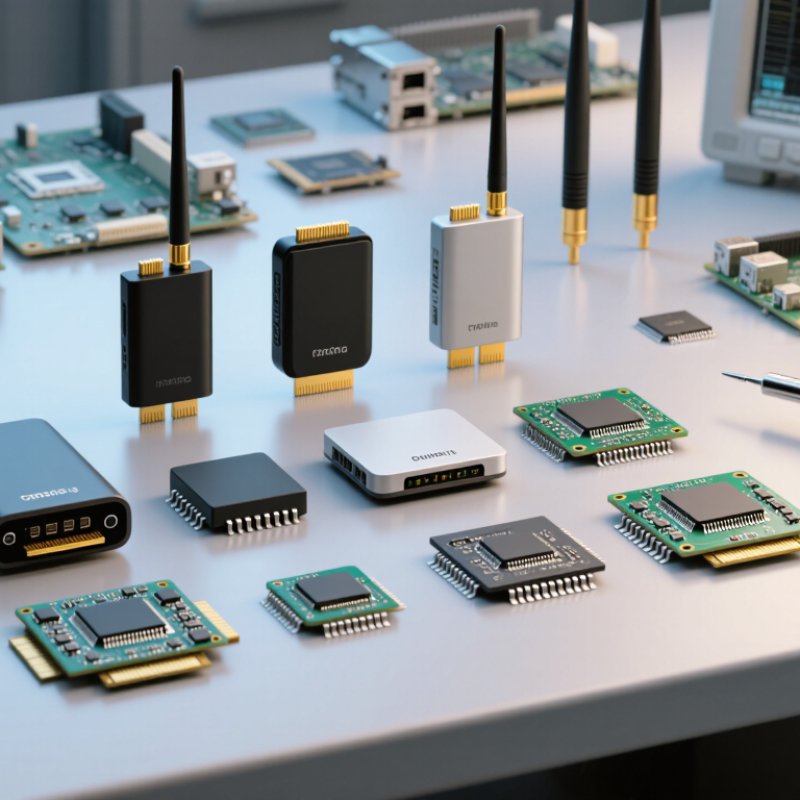
Wireless WiFi modules are compact electronic units that add wireless network communication to a product. They usually combine a radio transceiver, processor, memory, antenna connection, and firmware. Some also include security functions and power-management circuits. In simple terms, the module connects an embedded device to a local WiFi network without requiring a complete wireless design.
The scope is broader than home routers. It includes modules for sensors, industrial controllers, medical equipment, appliances, vehicles, and handheld devices. Common options support 2.4 GHz, 5 GHz, or newer multi-band operation. Interfaces may include UART, SPI, USB, or Ethernet. During product testing, engineers should check connection stability, heat, power use, antenna placement, and performance through walls. Small design details matter.
A worldwide manufacturer comparison should examine more than shipment volume. Reliable evaluation includes radio performance, firmware maintenance, documentation, production consistency, technical support, and required regional certifications. Security updates are essential, especially for connected products used for many years. The definition is not perfectly fixed. Some suppliers sell a bare communication module, while others provide a complete development platform. That difference can affect cost, testing time, and engineering responsibility. A practical mistake is choosing by maximum speed alone. Real environments contain metal cabinets, crowded channels, weak power supplies, and inconsistent antennas. Field results may differ from laboratory figures.
Evaluating global WiFi module manufacturers requires more than comparing prices. Wi-Fi Alliance reports that over 20 billion Wi-Fi devices are now used worldwide. This scale makes standards compliance a practical screening tool. Check certification, supported generations, regional frequency rules, and interoperability test records. A module should also maintain stable throughput in a crowded office, not only in a laboratory.
Radio performance needs measurable evidence. Compare sensitivity, transmit power, antenna diversity, latency, and power consumption under identical conditions. IDC’s Worldwide WLAN Tracker shows enterprise WLAN spending remains a multibillion-dollar market, increasing pressure on suppliers to deliver predictable performance. Request production samples, thermal data, and long-duration logs. Short demonstrations can hide overheating or unstable roaming.
Security and supply continuity deserve equal weight. Review secure boot, signed firmware, vulnerability response time, update duration, and documented encryption support. NIST guidance encourages risk-based controls, but supplier evidence is still essential. Examine factory locations, component traceability, minimum order quantities, and replacement plans. Omdia’s wireless market analyses indicate continued growth in Wi-Fi 6E and Wi-Fi 7 adoption, yet newer specifications can increase testing complexity. A low-cost module may become expensive after redesigns, certification delays, or software maintenance. My scorecard would assign clear weights, but those weights can be wrong for industrial equipment. Field trials should remain decisive.
Wireless WiFi module manufacturing is shaped by reliability, integration, and long-term support. One leading manufacturer specializes in compact modules for smart home devices. Another focuses on industrial gateways requiring stable connections in dusty environments. A third develops low-power modules for sensors and battery equipment. A fourth combines WiFi with Bluetooth for connected consumer products. Its testing process often includes heat, vibration, and signal interference checks.
A fifth manufacturer serves automotive and transportation applications, where temperature tolerance matters. A sixth produces high-throughput modules for video devices and edge computing. A seventh emphasizes certified designs that shorten product approval cycles. An eighth supports embedded Linux platforms and offers detailed development tools. A ninth targets medical and monitoring equipment, with careful attention to predictable wireless performance. The tenth provides flexible module formats for original equipment manufacturers. However, technical claims still need independent verification. Datasheets can look excellent, yet field performance may vary.
Tips: Check antenna layout, operating temperature, certification status, supply continuity, and software support before choosing a module. Test the complete enclosure, not only the development board. Ask for failure-rate data and lifecycle commitments. A cheaper module may create higher engineering costs later. Pay attention to firmware update methods, because weak maintenance planning can undermine an otherwise reliable design.
Wi-Fi generations and their maximum theoretical PHY data rates commonly supported across modern wireless module portfolios
The chart compares the maximum theoretical physical-layer data rates defined by major Wi-Fi generations. Actual throughput depends on channel width, spatial streams, modulation, interference, antenna design, regulatory limits, and the client device.
Top 10 Wireless WiFi Module Manufacturers Worldwide: Core Technologies, Standards, and Product Applications
Leading wireless module manufacturers compete through radio performance, certification quality, and long-term engineering support. Modern modules commonly support IEEE 802.11ac, Wi-Fi 6, Wi-Fi 6E, and Wi-Fi 7. Some also combine Bluetooth Low Energy, Thread, or Zigbee connectivity. Dual-band and tri-band designs help reduce congestion in offices, factories, and smart homes. However, performance depends on antenna layout, enclosure materials, firmware, and local interference. A specification sheet cannot show everything.
Security is equally important. WPA3, secure boot, encrypted firmware updates, and hardware-based key storage strengthen connected products. Certified modules can simplify compliance for devices sold across different markets. Typical applications include industrial gateways, medical monitors, smart appliances, access-control panels, and vehicle infotainment systems. Engineers should test throughput, latency, roaming, power use, and heat under realistic conditions. Laboratory results may look excellent. Field results can differ.
Tips: Check regional frequency rules before selecting a module. Confirm operating temperature and connector options. Test the final enclosure, not only the development board. Leave space for antenna clearance. It is easy to underestimate this detail. Also review firmware support and expected product lifetime. A lower-cost module may create higher integration costs later, especially when documentation is incomplete or updates become uncertain.
Anonymized global manufacturer profiles and representative wireless module capabilities
| Rank | Manufacturer Profile | Core Technology and Module Positioning | Supported Wireless Standards | Typical Frequency Bands | Host and Peripheral Interfaces | Security and Compliance Features | Typical Product Applications |
|---|---|---|---|---|---|---|---|
| 1 | Profile A: High-Volume Consumer Connectivity | Highly integrated system-on-module designs combining a wireless baseband, radio, processor support, memory options, and power-management functions. | Wi-Fi 6 and Wi-Fi 6E; IEEE 802.11a/b/g/n/ac/ax; dual-band concurrent operation. | 2.4 GHz, 5 GHz, and selected 6 GHz channels where permitted by local regulations. | SDIO, PCIe, USB, UART, GPIO, I²C, and PCM/I²S audio interfaces. | WPA2, WPA3, AES encryption, secure boot support, and regional regulatory certification targets. | Smart televisions, home gateways, streaming devices, residential routers, and consumer appliances. |
| 2 | Profile B: Enterprise and Industrial Networking | Industrial-grade modules designed for stable throughput, extended temperature operation, long product lifecycles, and centralized network management. | Wi-Fi 6 and Wi-Fi 6E; IEEE 802.11n/ac/ax; OFDMA and target-wake-time features. | 2.4 GHz, 5 GHz, and 6 GHz variants depending on regional approval. | PCIe, SDIO, Ethernet MAC/PHY options, USB, GPIO, and antenna diversity connections. | WPA3-Enterprise, 802.1X authentication, protected management frames, secure firmware update, and hardware cryptography. | Industrial access points, warehouse terminals, machine controllers, video surveillance, and enterprise networking equipment. |
| 3 | Profile C: Wi-Fi 7 High-Performance Modules | Multi-link and high-throughput module architecture intended to reduce latency and improve performance in congested wireless environments. | Wi-Fi 7 and IEEE 802.11be, with backward compatibility for IEEE 802.11a/b/g/n/ac/ax. | 2.4 GHz, 5 GHz, and 6 GHz; multi-link operation depends on device design and regulatory approval. | PCIe Gen 3 or later, USB, SDIO, UART, GPIO, and high-speed host-memory interfaces. | WPA3, AES encryption, secure boot, firmware authentication, and protected management frames. | Premium routers, wireless docking stations, augmented-reality equipment, gaming systems, and high-resolution media devices. |
| 4 | Profile D: Embedded IoT and Low-Power Connectivity | Compact, low-power wireless modules with integrated microcontroller functions, power-saving modes, and simplified antenna designs. | IEEE 802.11b/g/n, with selected products supporting Wi-Fi 6; many platforms also integrate Bluetooth Low Energy. | Primarily 2.4 GHz; 5 GHz is available in higher-performance variants. | SPI, SDIO, UART, I²C, I²S, PWM, ADC, GPIO, and USB device interfaces. | WPA2 or WPA3, TLS support through the host software stack, secure boot options, and encrypted storage. | Smart lighting, sensors, thermostats, appliances, access-control systems, and battery-powered monitoring devices. |
| 5 | Profile E: Automotive-Ready Wireless Modules | Modules optimized for vehicle networking, robust thermal performance, coexistence management, and long-term embedded software support. | IEEE 802.11a/b/g/n/ac/ax; selected designs support automotive Wi-Fi access-point and station modes. | 2.4 GHz and 5 GHz; 6 GHz support depends on vehicle architecture and jurisdiction. | PCIe, SDIO, USB, Ethernet, UART, CAN-related host integration, and audio interfaces. | WPA2/WPA3, certificate-based authentication, secure boot, signed updates, and vehicle cybersecurity controls. | Infotainment systems, passenger hotspots, rear-seat entertainment, telematics gateways, and vehicle diagnostics. |
| 6 | Profile F: Industrial Wireless and Automation | Ruggedized modules emphasizing deterministic connectivity, interference tolerance, extended temperature ranges, and connector flexibility. | IEEE 802.11n/ac/ax; support for enterprise roaming, quality-of-service mechanisms, and industrial network management. | 2.4 GHz and 5 GHz, with dual-band operation common in industrial installations. | PCIe, SDIO, Ethernet, USB, UART, GPIO, industrial serial interfaces, and external antenna connectors. | WPA2-Enterprise, WPA3-Enterprise, 802.1X, certificate management, secure update, and network segmentation support. | Robots, programmable controllers, automated guided vehicles, handheld terminals, and factory monitoring systems. |
| 7 | Profile G: Networking Equipment Modules | High-throughput radio modules supporting multiple spatial streams, advanced channel management, and integration with router operating systems. | Wi-Fi 5, Wi-Fi 6, Wi-Fi 6E, and Wi-Fi 7 product families; IEEE 802.11ac/ax/be. | 2.4 GHz, 5 GHz, and 6 GHz depending on the module generation. | PCIe, Ethernet, USB, serial management, GPIO, and multiple RF antenna paths. | WPA2/WPA3, firewall and VLAN integration through the host platform, secure firmware, and regulatory domain controls. | Wireless routers, mesh nodes, access points, broadband gateways, and fixed wireless access equipment. |
| 8 | Profile H: Medical and Healthcare Connectivity | Modules designed for dependable data transfer, controlled electromagnetic behavior, long availability, and integration into regulated equipment. | IEEE 802.11a/b/g/n/ac/ax; support varies according to medical device design and validation requirements. | 2.4 GHz and 5 GHz; 6 GHz is less common in validated medical deployments. | SDIO, PCIe, USB, UART, GPIO, Ethernet, and serial interfaces for embedded medical platforms. | WPA2-Enterprise or WPA3-Enterprise, 802.1X, certificate authentication, encrypted transport, and controlled firmware updates. | Patient monitors, diagnostic equipment, mobile clinical terminals, hospital carts, and connected laboratory instruments. |
| 9 | Profile I: Smart-City and Public Infrastructure | Wide-temperature and long-life modules supporting remote management, outdoor enclosures, robust roaming, and multi-device deployments. | IEEE 802.11n/ac/ax; selected platforms support Wi-Fi 6E and mesh networking functions. | 2.4 GHz and 5 GHz; 6 GHz availability depends on local spectrum rules and infrastructure policy. | Ethernet, PCIe, SDIO, USB, UART, RS-232/RS-485 through host equipment, GPIO, and external RF connectors. | WPA3, 802.1X, VPN integration, secure boot, signed updates, device identity, and centralized access control. | Public Wi-Fi, smart meters, traffic systems, environmental sensors, digital signage, and municipal gateways. |
| 10 | Profile J: Compact Computing and Robotics | Small-form-factor modules balancing high data rates, low latency, software flexibility, and support for multiple antenna configurations. | IEEE 802.11ac/ax, with Wi-Fi 7 options emerging for advanced computing platforms. | 2.4 GHz, 5 GHz, and selected 6 GHz configurations. | M.2 or Mini PCIe form factors, PCIe, USB, SDIO, UART, GPIO, and audio interfaces. | WPA2/WPA3, secure boot, encrypted credentials, authenticated firmware, and enterprise authentication options. | Single-board computers, edge artificial-intelligence systems, drones, autonomous robots, industrial cameras, and portable computers. |
Comparing the top ten wireless WiFi module manufacturers requires more than checking shipment volume. The Wi-Fi Alliance’s Global Economic Value of Wi-Fi 2023 report valued Wi-Fi’s global economic contribution at $4.9 trillion in 2022. It forecasts $5.7 trillion by 2027. That growth increases demand for stable, secure, and energy-efficient modules.
A useful comparison starts with radio standards, antenna design, certifications, and supply continuity. The Wi-Fi Alliance lists interoperability as a core requirement, while the Wi-Fi CERTIFIED 6 and Wi-Fi CERTIFIED 7 programs support testing across demanding environments. Check throughput in crowded offices, not only in open laboratories. Test roaming, latency, thermal behavior, and recovery after signal loss. Numbers need context.
Market data also needs careful interpretation. The IDC Worldwide Quarterly WLAN Tracker separates enterprise and consumer equipment, helping buyers avoid comparing unlike product categories. A module with a lower unit price may require more memory, stronger shielding, or additional certification work. Omdia’s wireless connectivity research similarly highlights rising demand for newer Wi-Fi generations and connected devices. However, forecasts can miss regional shortages and sudden component changes. A practical shortlist should include lifecycle support, firmware update policies, documentation quality, minimum order quantities, and field failure data. Test before scaling. Even a technically strong module can become a poor choice when software support ends early.
