Why Does Stainless Steel Handle High Heat?
Why Does Stainless Steel Handle High Heat? The answer begins with its chemistry, structure, and real-world limitations. Stainless steel contains chromium, which forms a thin, protective oxide layer when exposed to air. This layer helps resist further oxidation, even when a pan sits over a bright gas flame. Nickel can improve toughness and stability, while molybdenum strengthens resistance against harsh, high-temperature environments. Different grades behave differently, however. Stainless Steel And Heat is not one simple relationship.
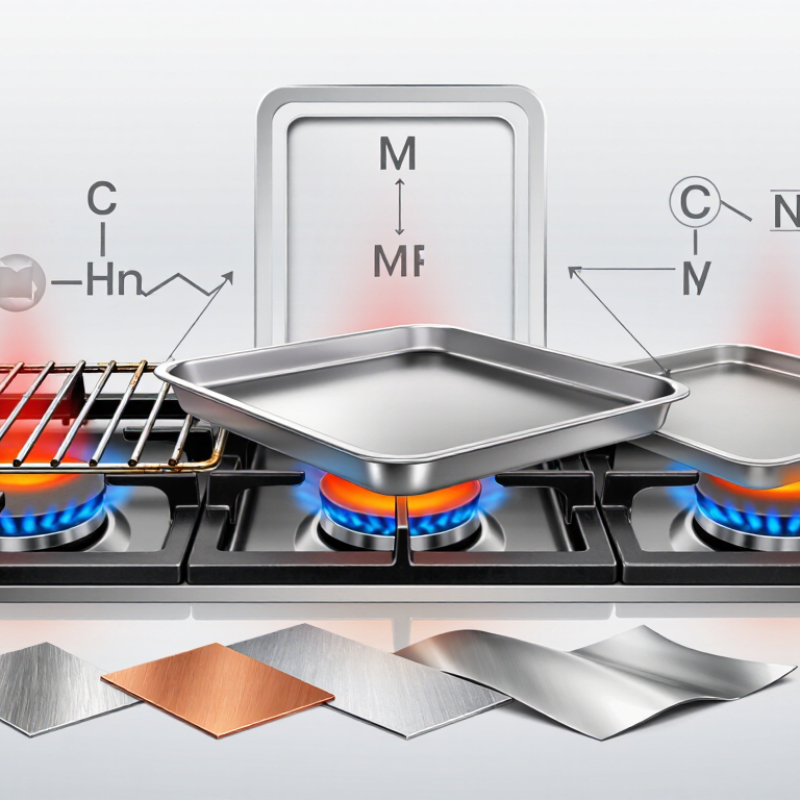
A stainless steel oven rack may remain solid during repeated baking, but it can still discolor, warp, or develop surface scaling. Its melting point is far above normal cooking temperatures, yet melting is rarely the first concern. Prolonged heat may weaken welds, distort thin sheets, or reduce corrosion resistance. Poor ventilation can make these effects worse. A heavy commercial tray often performs better than a thin household sheet because thickness affects heat distribution and mechanical stability. It feels obvious in practice.
Stainless steel also transfers heat less efficiently than aluminum or copper. That slower transfer can reduce sudden hot spots, but it may create uneven heating without a well-designed base. Engineers therefore study grade, thickness, temperature, exposure time, and surrounding atmosphere together. Product datasheets and established material-testing methods provide more reliable guidance than appearance alone. A glowing surface is a warning, not proof of failure. Careful use matters. The material is durable, not invincible. Any explanation of stainless steel performance should acknowledge that uncomfortable detail.
What Stainless Steel Is Made Of
Why Does Stainless Steel Handle High Heat?
What Stainless Steel Is Made Of
Stainless steel begins with iron, but iron alone rusts and weakens quickly. Chromium is the crucial ingredient. Most stainless grades contain at least 10.5% chromium by mass. When heated, chromium forms a thin, stable oxide layer on the surface. This layer slows oxidation and protects the metal beneath it.
Other elements adjust the alloy’s behavior. Nickel can improve toughness and stability at elevated temperatures. Molybdenum helps resist corrosion, especially in harsh environments. Carbon increases hardness, but too much carbon may reduce corrosion resistance. Manganese, silicon, and nitrogen also influence strength, structure, and manufacturing performance. The exact recipe matters. Stainless steel is not one material.
Tips: Check the steel grade before using it near a flame or oven. Confirm its temperature rating, thickness, and surface condition. Avoid sudden cooling after intense heating, because thermal stress may cause warping. In practical testing, a clean surface often performs better than a greasy one. Still, appearance can mislead. Shiny steel may already have lost strength internally. I once underestimated that difference. Temperature, load, and heating time should be assessed together.
How Its Atomic Structure Responds to Heat
Why Does Stainless Steel Handle High Heat?
How Its Atomic Structure Responds to Heat
Stainless steel tolerates high heat through the behavior of its atomic structure. Iron atoms share electrons in metallic bonds. These bonds let atoms vibrate without immediately separating. When temperature rises, vibration increases. The metal expands, but its structure usually remains connected.
Chromium atoms add another layer of protection. They react with oxygen and form an extremely thin chromium oxide film. This film repairs itself when scratched, provided oxygen is available. Nickel can stabilize the atomic arrangement in many stainless steel grades. That structure often improves toughness during heating and cooling. The result is useful, but not unlimited.
At high temperatures, atoms move more vigorously. Grain boundaries can weaken, and prolonged heat may cause creep. Some grades also lose strength faster than expected. I once assumed that a shiny surface meant complete heat resistance. That assumption was too simple. Heat resistance depends on composition, time, atmosphere, and temperature changes. A thin sheet may warp quickly, even when its atoms remain bonded. In practical inspection, discoloration can reveal surface reactions, but it does not measure internal strength. Stainless steel is heat-tolerant, not heat-proof.
Why Stainless Steel Resists Melting and Warping
Why Does Stainless Steel Handle High Heat?
Why Stainless Steel Resists Melting and Warping
Stainless steel handles high heat because its structure changes slowly under thermal stress. Its iron-based matrix contains chromium and often nickel, supporting corrosion resistance and stability. Chromium forms a thin protective oxide layer, but that layer does not explain everything. The alloy’s melting range is far above normal cooking temperatures, often exceeding 1,400°C, depending on composition. Typical ovens remain much cooler.
Warping is different from melting. Uneven heating makes one side expand before the other, creating internal stress. A thick pan may stay flat on a burner, while a thin sheet can bow or twist. I have seen this happen when cold water meets a glowing-hot surface. The steel survived, but its shape did not. Gentle heating helps. Matching the pan size to the heat source also reduces hot spots.
Stainless steel is strong, not invincible. Repeated heating and cooling can weaken poorly supported areas, especially seams, handles, and thin edges. Surface discoloration may appear before serious damage. That color is usually an oxide film, not melting. Still, it deserves inspection. Deep bends, cracks, loose fittings, or lasting distortion suggest replacement. One practical mistake is assuming high heat means unlimited heat. It does not. Performance depends on grade, thickness, design, and heating speed.
The Role of Chromium, Nickel, and Carbon
Why Does Stainless Steel Handle High Heat?
The Role of Chromium, Nickel, and Carbon
Stainless steel tolerates high heat because its elements work together, not because steel is naturally fireproof. Chromium creates a thin, adherent oxide layer on the surface. This layer slows further oxidation when oxygen and heat attack the metal. In practical fabrication, a heated stainless sheet may darken, yet its protective chemistry can remain active beneath the discoloration.
Nickel supports a stable austenitic structure in many heat-resistant grades. This structure helps the metal retain toughness during repeated heating and cooling. A furnace component may expand, contract, and expand again without cracking immediately. Nickel also improves resistance to certain corrosive environments. However, it does not guarantee excellent performance at every temperature. Atmosphere and mechanical load still matter.
Carbon is more complicated. Small amounts can strengthen stainless steel and improve hardness. Too much carbon may combine with chromium, forming carbides along grain boundaries. That reaction can reduce corrosion resistance after welding or prolonged heating. Low-carbon compositions often reduce this risk, but they may not solve every high-temperature problem. Real behavior is messier. Grain size, thickness, surface condition, and heating time can change the result. A simplified explanation can mislead, especially when one stainless grade is treated like every other grade.
How Heat Affects Stainless Steel in Practical Use
Why Does Stainless Steel Handle High Heat?
How Heat Affects Stainless Steel in Practical Use
Stainless steel tolerates high heat because its chromium forms a thin, protective oxide layer. This layer repairs itself when oxygen reaches the surface. Nickel can also improve structural stability in many common grades. However, high heat does not make the metal unaffected.
Watch the color. A heated surface may turn gold, blue, or dark gray. These colors often indicate oxidation or heat tint, especially near welds. The metal may remain usable, but its corrosion resistance can decrease if the surface is not cleaned properly. In workshop inspections, heat tint around a joint deserves attention, not panic.
Thermal expansion creates another practical issue. A long sheet, pipe, or cooking vessel expands as its temperature rises. Uneven heating can cause warping, stress, or small distortions. Stainless steel also conducts heat less efficiently than copper, so hot spots may develop over a flame or heating element. Heat cycling can slowly weaken poorly designed joints, particularly when pressure and vibration are present. A thick component may feel safe while its inner section remains extremely hot. That detail is easy to miss. Cleaning matters too; salt, grease, and trapped moisture can intensify surface damage after heating. For reliable use, engineers check the grade, thickness, heating rate, ventilation, and cooling method rather than relying on appearance alone.
Why Does Stainless Steel Handle High Heat?
Typical thermal conductivity of common stainless steel grades at approximately 20°C
Stainless steel generally conducts heat more slowly than carbon steel, which helps reduce rapid heat transfer and thermal shock in practical applications. Its high-temperature performance mainly comes from its chromium-rich passive oxide layer, which protects the surface from oxidation and corrosion. Actual service limits also depend on alloy grade, load, exposure time, oxidation conditions, and thermal cycling.




