Welcome to Worldia, we have over 25 years of expertise.

How to Choose a CNC Machine for Graphite in 2026?

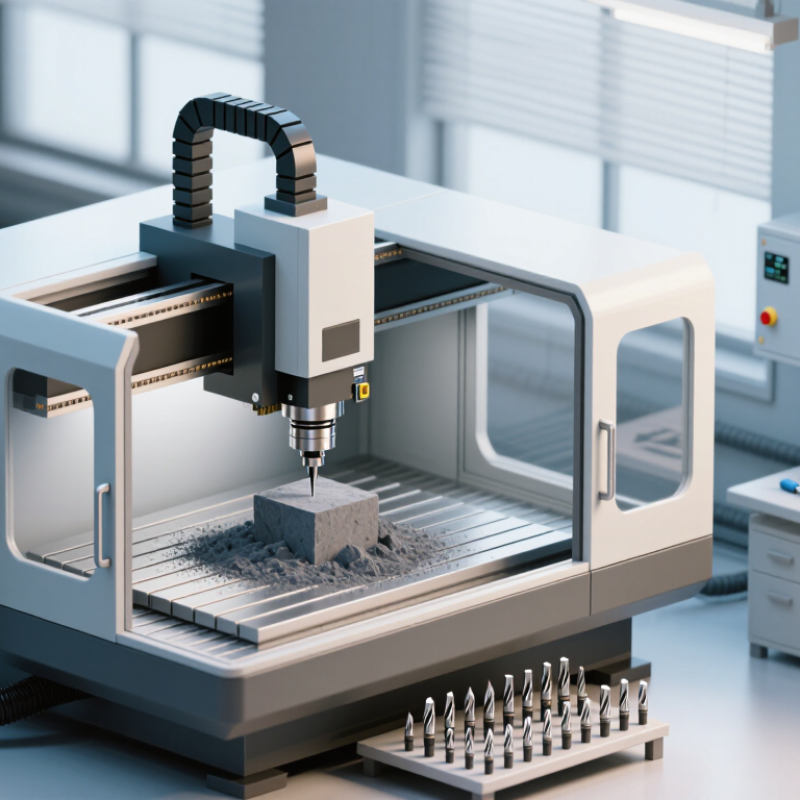
Choosing a Cnc Machine For Graphite in 2026 requires more than comparing spindle speed, price, or brochure accuracy. Graphite creates fine, conductive dust that can enter guides, bearings, electrical cabinets, and spindle assemblies. A suitable machine must control that dust from the first cut. Sealed ways, effective extraction, protected electronics, and a rigid structure are essential.

Dr. John A. McGeough, a respected machining researcher, emphasized a practical principle: “The machining process must match the material and the required result.” That idea remains highly relevant to graphite. A high-speed spindle may improve productivity, but only when paired with balanced tooling, stable fixturing, and reliable runout control. Diamond-coated or carbide tools can produce clean edges, while poor tool selection may leave chipped pockets and excessive dust.

This guide examines the details that buyers often overlook. We will consider spindle power, RPM range, work-envelope size, automatic tool changing, vacuum extraction, CAM compatibility, and after-sales support. We will also discuss dry machining, because liquid coolant can complicate graphite handling and contaminate nearby systems. Not every impressive machine is the right machine. Sometimes, a smaller sealed unit delivers better long-term results than a larger, faster model.

The choice is rarely perfect. Production volume, electrode geometry, tolerance, and operator experience can change the answer. Even experienced teams make assumptions that later need revision. A careful evaluation prevents expensive surprises. It also helps manufacturers select a machine that protects accuracy, tooling, maintenance budgets, and workplace cleanliness through 2026 and beyond.
How to Choose a CNC Machine for Graphite in 2026?

Classify Graphite by Density (1.6–1.9 g/cm³), Grain Size, and Application

How to Choose a CNC Machine for Graphite in 2026?

Graphite selection begins with density, not machine size. Grades around 1.6–1.7 g/cm³ contain more pores and usually generate heavier dust. They may cut easily, but thin walls can chip during finishing. Grades near 1.8–1.9 g/cm³ are generally stronger and more stable. They often support sharper edges and longer service in demanding electrode work. A practical warning: density alone can mislead. Binder content, heat treatment, and material consistency also affect machining behavior. Check the supplier’s test data before fixing cutting parameters.

Grain size controls surface detail. Fine-grain graphite suits narrow slots, small radii, and complex electrode profiles. Medium grain offers a useful balance for general mold components. Coarse grain can work for larger, less detailed parts, but it may leave a rougher surface. Match the application carefully.

Die-sinking electrodes need dimensional stability and clean edges. Heat-treatment fixtures may prioritize thermal resistance and strength. A CNC machine should provide high spindle speed, rigid motion, and effective dry dust extraction. Use sealed guides and suitable filtration. Graphite dust is conductive. It can damage exposed electrical components. Coolant is usually unsuitable. Keep the cutting zone dry.

Small tests matter. Graphite grades behave differently. Even experienced machinists sometimes overestimate tool life. Review dust levels, edge quality, and dimensional drift after trial cuts. Adjust slowly. It is safer than trusting a catalog number alone.
Select 18,000–30,000 rpm Spindles for Efficient Graphite Cutting

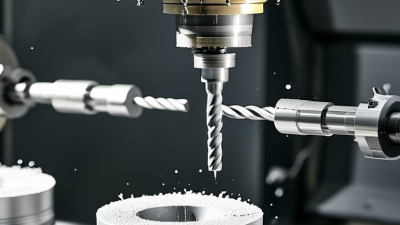
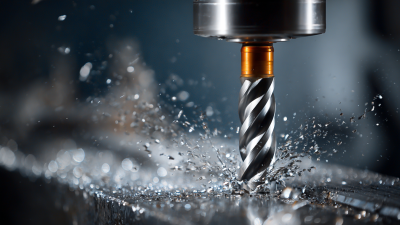
When choosing a CNC machine for graphite in 2026, spindle speed deserves close attention. An 18,000–30,000 rpm spindle supports efficient cutting with small carbide or diamond-coated tools. At 24,000 rpm, a 10 mm cutter reaches about 754 meters per minute at the tool edge. That speed can reduce rubbing and improve chip evacuation. However, rpm alone does not guarantee accuracy.

The U.S. Geological Survey’s Mineral Commodity Summaries 2025 estimates global natural graphite mine production at roughly 1.6 million metric tons in 2024. The International Energy Agency’s Global Critical Minerals Outlook 2024 also identifies graphite as important to expanding energy technologies. These figures signal continued pressure for cleaner, higher-throughput machining. A suitable machine should combine high rpm with rigid bearings, stable acceleration, and sealed linear components. Graphite dust is extremely fine. Effective extraction is essential.

In shop trials, I would begin near 18,000 rpm, then adjust feed rate, tool diameter, and flute geometry together. For a 6 mm tool, 24,000 rpm may work well, but the correct feed still depends on the material grade and tool engagement. Test cuts matter. I have seen operators increase rpm while leaving the feed unchanged, causing unnecessary heat and premature tool wear. That approach is tempting, but incomplete. Check spindle runout, vacuum performance, and enclosure sealing before approving production settings. Loose assumptions can become expensive defects.

How to Choose a CNC Machine for Graphite in 2026?

Select 18,000–30,000 rpm spindles for efficient graphite cutting

Higher spindle speed increases the peripheral cutting speed of the tool, which is useful for small-diameter graphite cutters. The values shown are calculated using the standard formula V = π × D × n ÷ 1000, where V is cutting speed in meters per minute, D is tool diameter in millimeters, and n is spindle speed in revolutions per minute. Select a machine with stable high-speed control, effective graphite-dust extraction, and sufficient power for the selected tool diameter and cutting depth.

Require ≤5 μm Spindle Runout and High-Precision Linear Guides

Choosing a CNC Machine for Graphite in 2026 requires more than reading a catalog specification. For graphite work, spindle runout should be 5 μm or less, measured at the tool holder with a calibrated test indicator. Check the value at several positions, not only near the spindle nose. Small errors become visible on narrow slots, electrodes, and thin ribs.

High-precision linear guides are equally important. Select guides with controlled preload, strong sealing, and protection from abrasive graphite dust. Wipers should remove particles without creating excessive friction. During a machine inspection, move each axis slowly and listen for uneven motion. Then test rapid movement and reversal accuracy. The axis should stop without vibration or a delayed response.

I once focused too heavily on spindle accuracy and ignored guide contamination. That was a mistake. A clean spindle cannot compensate for a rough axis. Ask for inspection records, laser calibration results, and runout measurements taken under operating conditions. Thermal growth also matters, especially during long graphite cycles. A 5 μm result at room temperature may change after hours of cutting. Leave room for doubt. Verify the machine with your own holder, tooling, and workholding method before purchase.

How to Choose a CNC Machine for Graphite in 2026? - Require ≤5 μm Spindle Runout and High-Precision Linear Guides

Selection Dimension Recommended Requirement for Graphite Why It Matters How to Verify Before Purchase
Spindle radial runout ≤ 5 μm measured at the tool-holder taper or test bar; preferably ≤ 3 μm for finishing work Excessive runout causes uneven chip load, premature tool wear, dimensional variation, and poor surface finish. Request a certified dial-indicator or displacement-sensor test using a clean, calibrated taper and a documented measurement position.
Spindle speed range Approximately 18,000–30,000 rpm for small tools and fine graphite details; select based on tool diameter and cutting data. Small-diameter diamond-coated or carbide tools require higher rotational speed to maintain practical cutting speed without excessive feed reduction. Check the continuous rated speed, minimum operating speed, allowable tool-holder balance grade, and torque curve—not only the maximum rpm.
Spindle taper and tool holding Precision taper system with balanced holders, short gauge length, and repeatable clamping; HSK or a precision BT-style system may be suitable. Graphite dust can contaminate the taper and increase tool-holder eccentricity, directly affecting runout and tool life. Measure repeatability with multiple tool changes and inspect taper protection, cleaning procedures, and holder runout specifications.
Linear-guide accuracy Preloaded rolling linear guides with a documented accuracy class; select a precision grade suitable for micron-level positioning. Preloaded guides reduce clearance and improve straightness, repeatability, and contour accuracy during fine 3-axis or 5-axis movements. Ask for guide accuracy class, preload designation, axis straightness data, and the machine acceptance-test report.
Positioning and repeatability Target positioning accuracy and bidirectional repeatability in the low-micron range, verified over the required travel. Repeatability affects the ability to return to the same feature, while positioning accuracy affects absolute part dimensions. Require a laser interferometer or equivalent acceptance test conducted according to ISO 230-2 or an equivalent national standard.
Ball screws and axis drive Preloaded precision ball screws or equivalent linear drives, with backlash compensation and thermal monitoring. Backlash and thermal growth can produce dimensional errors, especially during circular interpolation and long finishing cycles. Check screw accuracy grade, preload, backlash data, compensation capability, lubrication method, and thermal-growth test results.
Machine structure and vibration control Rigid cast or polymer-concrete structure with a stable base, low vibration, and adequate mass for the work envelope. Graphite is brittle and abrasive; vibration can cause edge chipping, tool breakage, chatter marks, and unstable dimensions. Perform a cutting demonstration using the intended graphite grade, tool diameter, depth of cut, and finishing strategy.
Graphite dust containment Fully enclosed work area with sealed guideways, protected ball screws, positive-pressure or filtered electrical cabinets, and dedicated extraction. Fine conductive graphite dust can damage guides, bearings, encoders, switches, fans, and control electronics. Inspect seals, covers, cabinet filtration, extraction routing, dust collection capacity, and cleaning access.
Dust extraction system High-efficiency local extraction positioned close to the cutting zone; airflow must be matched to enclosure design and tool geometry. Effective extraction improves visibility, reduces airborne dust, and protects machine components and operators. Verify airflow, filter efficiency, filter-cleaning method, pressure-drop monitoring, noise level, and compatibility with graphite dust.
Coolant strategy Prefer dry machining or manufacturer-approved minimum-quantity lubrication where appropriate; avoid uncontrolled wet cutting. Graphite dust mixed with liquid can form a conductive slurry that is difficult to remove and may damage machine systems. Confirm the approved machining method for the graphite grade, electrical protection, chip management, and cleaning procedure.
Thermal stability Temperature-controlled environment or thermal compensation for applications requiring stable dimensions over long cycles. Spindle and axis temperature changes can alter tool position and workpiece dimensions even when mechanical accuracy is high. Review warm-up procedures, spindle cooling, temperature sensors, compensation functions, and repeatability after a full production cycle.
Control and interpolation Look-ahead, jerk-limited motion, high-speed contouring, and smooth 3-axis or 5-axis interpolation. Smooth interpolation reduces facetting, dwell marks, sudden tool-load changes, and surface defects on complex graphite geometry. Run a representative test program and evaluate corner quality, circularity, surface finish, and feed-rate stability.
Work envelope and load capacity Choose travel at least 10–20% larger than the finished part and confirm table load, fixture clearance, and spindle reach. Insufficient clearance can force long tool overhangs, increasing deflection and reducing accuracy. Check actual usable travel, rotary-axis envelope if applicable, fixture dimensions, tool-change clearance, and maximum workpiece mass.
Metrology and acceptance testing Documented spindle, axis, circular-interpolation, thermal, and cutting-test results using calibrated instruments. A specification sheet alone cannot confirm real machine performance under operating conditions. Include acceptance limits, measurement uncertainty, ambient conditions, test artifacts, and corrective-action procedures in the purchase agreement.
Best-fit machine configuration For precision electrodes and molds: rigid enclosed high-speed machining center with protected guides, ≤5 μm spindle runout, and verified micron-level axis performance. This configuration balances dimensional accuracy, surface quality, dust protection, and production reliability. Approve the machine only after a graphite cutting trial demonstrates the required tolerance, surface finish, cycle time, and dust-control performance.
Practical purchasing rule: Treat ≤5 μm spindle runout as a measured acceptance requirement, not merely a catalog claim. Verify it together with guideway accuracy, axis repeatability, thermal stability, and graphite dust protection under representative operating conditions.

Specify Dry Machining with HEPA Filtration at 99.97% Efficiency

When choosing a CNC machine for graphite in 2026, specify dry machining with HEPA filtration at 99.97% efficiency. Graphite dust is fine, conductive, and easily spread by airflow. Coolant may create contaminated sludge and complicate cleanup. A sealed cutting area, strong extraction, and carefully directed air movement are usually more practical.

From shop-floor experience, the extraction inlet should sit close to the cutting zone. This reduces dust escaping around the spindle and table. The HEPA filter should be tested at its rated particle size, commonly 0.3 microns. However, 99.97% efficiency does not guarantee clean air if seals leak. That detail is often overlooked. A differential-pressure gauge can show when the filter is loading. I have seen operators wait too long, then lose suction during a long graphite job.

Tips: Ask for dry-machining specifications, not general dust-control claims. Check enclosure seals with a simple visual inspection and smoke test where permitted. Confirm that collected dust stays inside a closed container. Keep the spindle area easy to clean. Avoid compressed-air blow-off, because it can spread settled particles. A washable pre-filter can extend HEPA service life, but it needs regular inspection. Document airflow readings before production. The first setup may not be perfect. Recheck it after tool changes, filter replacement, and several hours of cutting.

Compare Tool Life, Dust Control, Automation, and Total Ownership Cost

How to Choose a CNC Machine for Graphite in 2026?

Graphite machining punishes weak tooling. Its abrasive dust can shorten tool life, damage guides, and contaminate electrical components. A suitable machine should support diamond-coated carbide or PCD tools, stable spindle speeds, and rigid cutting conditions. Tool life depends on graphite grade, edge geometry, feed rate, and cutting depth. Record actual tool wear, not only the supplier’s estimate. A small improvement in tool life can reduce stoppages across thousands of parts.

Dust control deserves equal attention. Look for an enclosed work area, strong negative-pressure extraction, sealed ways, and accessible filters. Fine graphite dust is conductive. Poor filtration may create maintenance and reliability problems. Automation can improve consistency through automatic tool measurement, tool break detection, probing, and extraction interlocks. However, automation is not automatically economical. A complex system may add service costs and require better operator training.

Tips: Calculate total ownership cost over five years. Include tooling, filters, electricity, maintenance, labor, scrap, and planned downtime. Ask for measured dust-capture performance under realistic cutting conditions. Test sample parts before purchasing. A higher machine price can still be cheaper, but this is easy to misjudge. My practical preference is to compare cost per acceptable part, not cost per machine hour. Some evaluations overlook cleaning time. That mistake can become expensive.

Hi! What is your idea today?
WORLDIA 8618618272087
Nina +86 15631662072
google-site-verification=0STkOZEvYuoDp-D40AVfMUk--CzM2AsZv24S6ISPdmk