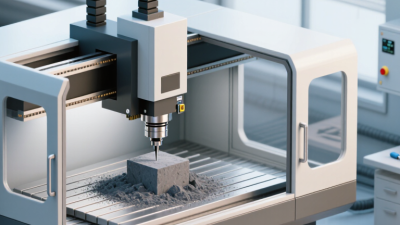
Choosing the right Graphite Cnc Machine is not simply a matter of comparing spindle speed and price. Graphite dust is abrasive, conductive, and surprisingly invasive. It can enter linear guides, electrical cabinets, and spindle assemblies when protection is weak. A suitable machine must control dust at the cutting zone, maintain stable motion, and preserve accuracy during long production cycles.
Masahiko Mori, a respected figure in the machine-tool industry, is widely associated with the statement, “The machine tool is the mother machine.” His words reflect an important truth: the machine itself shapes the quality of every component it produces. For graphite machining, that means examining the enclosure design, vacuum system, spindle runout, filtration method, and software control before accepting a specification sheet. A 24,000-rpm spindle may look impressive. It may still perform poorly with inadequate extraction.
This guide explains how to evaluate a Graphite Cnc Machine through practical evidence, not marketing language. Look for sealed guideways, effective dust collection, compatible tooling, and service support from technicians who understand graphite applications. Ask for sample cuts using your actual electrode grade. Inspect the surface finish, edge quality, dust leakage, and tool wear afterward. No checklist is perfect. Shop temperature, operator habits, and material density can change results. I would not pretend that the most expensive machine is automatically the best choice. The stronger decision comes from matching machine design, production volume, maintenance discipline, and verified cutting results.
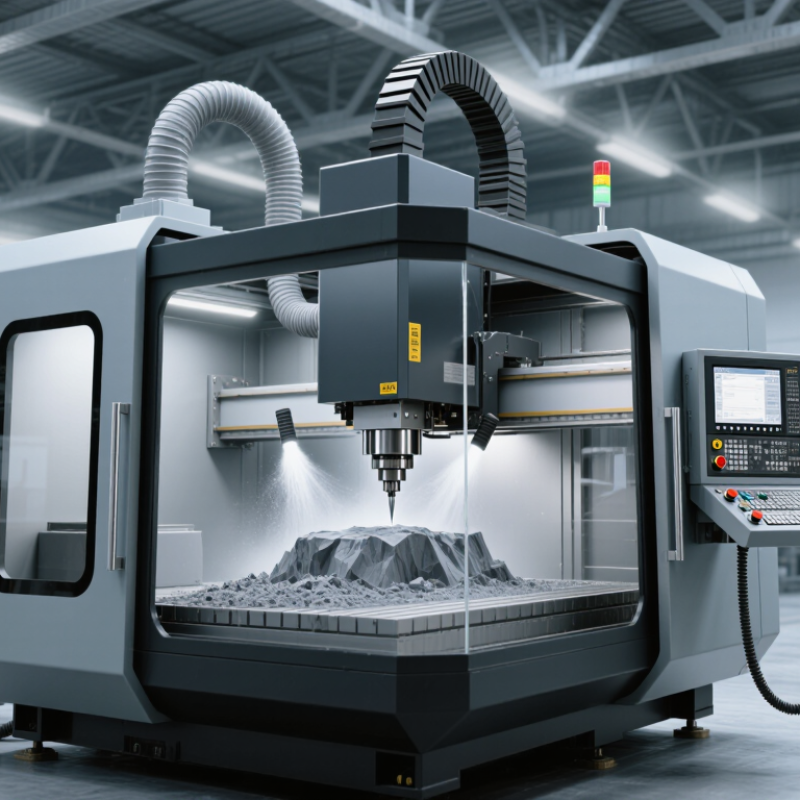
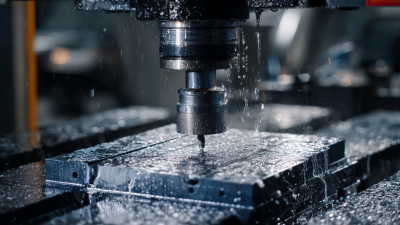
Choosing the best graphite CNC machine begins with understanding the material, not comparing machine sizes. Graphite cuts easily, but its dust is electrically conductive and highly abrasive. A suitable machine needs sealed guides, protected drives, and strong dust extraction. Ordinary coolant systems may create sludge and handling problems. Dry machining is often more practical.
Define the real machining requirements before selecting specifications. Record electrode dimensions, expected tolerances, surface finish, and daily production volume. Small electrodes may require high spindle speed and precise motion control. Larger parts need a rigid frame and stable workholding. A vacuum table can help, but fragile graphite edges may still chip. Secure support matters.
Think about the entire workflow. The control system should handle fine tool paths without visible hesitation. CAM settings must control corner speed and reduce sudden tool engagement. Use sharp, suitable cutters, then inspect the first part under magnification. Tiny edge breaks can affect electrical discharge performance. They are easy to miss.
A practical machine trial is valuable. Cut your actual graphite grade, not a convenient substitute. Measure dust behavior, tool wear, and dimensional drift after several hours. A perfect setup on paper can still fail in production. One overlooked seal may spread black dust everywhere. That lesson is easy to learn the hard way. Ask for maintenance procedures, extraction capacity, and verified accuracy records before committing.
Choosing the best graphite CNC machine starts with comparing machine types, not advertised specifications. Graphite cuts differently from aluminum or steel. Its dust is fine, abrasive, and electrically conductive. A suitable machine needs rigid guides, controlled spindle speed, and effective dust extraction.
A three-axis CNC mill suits flat plates, electrodes, and uncomplicated cavities. It usually costs less and simplifies programming. However, deep walls may require several setups. That can reduce accuracy. A five-axis machine reaches angled surfaces with fewer fixtures. It is valuable for complex molds and detailed electrode work. The trade-off is higher programming demand and greater maintenance responsibility.
A graphite-focused CNC router can process large sheets quickly, especially when production involves repeated profiles. Its performance depends heavily on enclosure design and filtration. An enclosed machining center offers better dust control and stable cutting conditions. High-speed spindles can improve surface quality, but excessive speed may create heat or accelerate tool wear. Carbide tooling, short tool overhang, and steady feed control matter more than speed alone.
In practical evaluations, check dust seals, filter access, table rigidity, and software compatibility. Ask for sample-cut data using graphite similar to yours. A machine may look powerful on paper. Real results can differ. I would also review operator training needs, because poor cleaning habits can damage guides and electrical components. The best choice is usually the simplest machine that holds the required tolerance consistently. That judgment may change after production testing.
| Evaluation Dimension | 3-Axis Vertical Machining Center | Dedicated High-Speed Graphite Machine | 5-Axis Machining Center | CNC Router |
|---|---|---|---|---|
| Typical application | Molds, plates, fixtures, and medium-complexity electrode work | High-precision graphite electrodes, complex cavities, and production machining | Multi-sided electrodes, turbine-like profiles, and parts requiring fewer setups | Large, relatively flat graphite plates, patterns, and low-to-medium precision work |
| Typical spindle speed | 8,000–18,000 rpm | 12,000–30,000 rpm or higher | 12,000–24,000 rpm | 12,000–24,000 rpm |
| Machine rigidity | High; suitable for controlled cutting loads | Very high; designed to reduce vibration and thermal drift | High, although the rotary axes may reduce rigidity compared with a fixed 3-axis setup | Moderate; depends strongly on frame construction and gantry design |
| Graphite dust control | Requires sealed enclosures, targeted extraction, and protection of guideways | Usually includes integrated dry-cutting extraction, sealed axes, and filtration | Requires specialized extraction and protection for rotary-axis assemblies | Often uses an overhead or spindle-mounted vacuum system; enclosure quality varies |
| Recommended cutting method | Dry machining with efficient chip and dust extraction | Dry high-speed machining with dedicated graphite tooling and continuous filtration | Dry machining; minimum-quantity lubrication is generally not a substitute for dust control | Dry machining with strong vacuum extraction; avoid uncontrolled dust discharge |
| Typical positioning accuracy | Approximately ±0.005–0.010 mm, depending on machine class and test conditions | Approximately ±0.002–0.005 mm with suitable thermal control and calibration | Approximately ±0.003–0.008 mm; rotary-axis accuracy affects the final result | Approximately ±0.010–0.050 mm, depending on frame stiffness and machine size |
| Surface finish capability | Good for standard electrodes and milled surfaces when feeds and speeds are optimized | Very good; high-speed control and low vibration support fine finishing | Very good on complex surfaces, provided rotary-axis motion is properly calibrated | Fair to good; may show more vibration or tool marks on detailed work |
| Workpiece complexity | Low to high, with additional setups for multiple faces | Medium to very high, particularly for precision electrode geometries | Very high; simultaneous or indexed multi-axis machining reduces repositioning | Low to medium; best for prismatic or open-profile components |
| Production efficiency | Good for mixed production and moderate batch sizes | Excellent for repeat electrode production and unattended operation | Excellent for complex parts because multiple setups can be eliminated | Good for large-format work and short setup times |
| Tooling requirements | Diamond-coated or carbide tools selected for graphite and controlled runout | High-quality diamond-coated tools, balanced holders, and automatic tool measurement are recommended | Short, rigid tools and collision-aware holders are important for tilted-axis cutting | Large-diameter or extended-reach tools may be used, but tool deflection must be monitored |
| Main advantages | Versatile, widely applicable, and easier to integrate into an existing machine shop | Best dust protection, speed, precision, thermal stability, and graphite-specific productivity | Excellent access to complex surfaces and fewer workholding operations | Large working area, simple operation, and comparatively low entry cost |
| Main limitations | May require costly modifications for dust protection and high-speed finishing | Higher purchase price and narrower suitability for general metalworking | Higher programming, inspection, maintenance, and operator skill requirements | Lower rigidity, lower precision, and greater risk of vibration on fine details |
| Relative investment level | Medium | High | High to very high | Low to medium |
| Best choice when | The shop needs one flexible machine for graphite and other materials | Graphite electrodes are a core product and precision, cleanliness, and throughput are priorities | Parts have complex geometry or require machining on several faces | The work involves large dimensions, simple geometry, and moderate accuracy requirements |
Note: Performance ranges are typical industry values and can vary with machine size, spindle design, thermal conditions, tooling, workholding, material grade, and measurement standards.
Choosing the best graphite CNC machine starts with measurable specifications, not attractive marketing language. Speed is not everything. Graphite is abrasive, brittle, and produces fine conductive dust, so rigidity, spindle runout, and extraction deserve equal attention. A practical target is spindle runout below 5 micrometres, verified with a test report rather than a verbal promise. Check the spindle’s continuous power, bearing design, and speed range against your tools and workpiece sizes. Excessive speed can create heat, vibration, and premature tool wear.
The U.S. Geological Survey’s Mineral Commodity Summaries 2024 estimated global natural graphite production at about 1.6 million metric tons in 2023. The International Energy Agency’s Global Critical Minerals Outlook 2024 also identifies graphite as a major supply-risk material. These figures support careful investment, especially where scrap is costly. Select a sealed work zone, high-efficiency vacuum extraction, and filtration designed for fine particulate. A large working envelope is useful, but poor dust control can quickly contaminate guides and electrical components. Look for automatic probing, thermal compensation, and a controller that records tool life and alarm history. ISO 230-2 positioning tests can help verify repeatability, though shop conditions still matter. A perfect specification sheet cannot predict every chip pattern. That is the uncomfortable part. Test one representative graphite component before committing to full production, and measure surface finish, dimensional drift, dust capture, and tool consumption over several cycles.
How to Choose the Best Graphite CNC Machine?
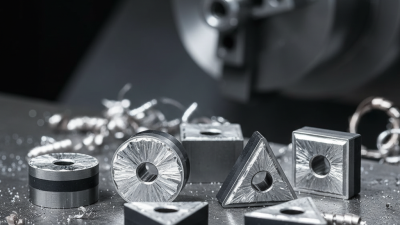
Choosing a graphite CNC machine starts with the tooling system. Graphite is abrasive, so ordinary carbide tools can lose accuracy quickly. Select diamond-coated carbide or polycrystalline diamond tools for longer edge life. Use rigid holders with minimal runout. Small runout errors can create uneven walls and premature tool failure. I would also specify high-speed spindle control and stable fixturing. A perfect setup is rare.
Dust control deserves equal attention. Choose a sealed machining area with negative pressure and local exhaust ventilation. OSHA’s Technical Manual identifies local exhaust as the preferred method for controlling airborne contaminants. OSHA Table Z-1 lists limits of 15 mg/m³ for total particulate and 5 mg/m³ for respirable particulate. These limits are not design targets. Keep exposure substantially lower through source capture, not housekeeping alone. Use a dedicated, grounded dust collector with suitable fine-particle filtration. Never scatter graphite dust with compressed air. Dust wins quickly.
Safety systems should include door interlocks, emergency stops, overload monitoring, and visible filter alarms. Graphite is electrically conductive, so exposed control cabinets need suitable protection. NFPA 652 calls for a dust hazard analysis when combustible particulate solids may be present. Test the actual graphite grade and particle size before selecting fire protection. My first inspection would focus on corners, cable trays, and the filter housing. Those hidden areas are easy to miss. Review ISO 12100 risk-assessment principles, document inspection intervals, and train operators to stop the machine when extraction weakens.
Choosing a graphite CNC machine starts with the cut, not the brochure.
Graphite dust is abrasive and can shorten spindle and guide life quickly. During shop evaluations, watch a test cut for edge quality, vibration, and dust containment.
A stable spindle matters, but high speed alone proves little. Request measured runout, repeatability data, and a sample part using your material grade. Small details matter.
Maintenance should fit daily production.
A sealed enclosure, efficient extraction, accessible filters, and protected linear components reduce cleaning time. Check how operators inspect the spindle, replace filters, and remove settled dust safely.
If service requires specialized tools, downtime may exceed the advertised savings. I once valued a lower purchase price too highly. The machine performed well, yet frequent filter changes consumed labor and interrupted production. That mistake changed my evaluation checklist.
Calculate total cost across three to five years.
Include tooling, electricity, extraction, filters, calibration, software, training, and service downtime. Compare cycle times using realistic graphite jobs, not optimistic demonstrations.
A slower machine with stronger dust control may cost less over time. However, overbuilt equipment can waste capital when workloads are light.
Request maintenance records, warranty limits, and response times in writing. Test the machine with your actual tolerances and fixture method.
Numbers help. Real dust tells more.